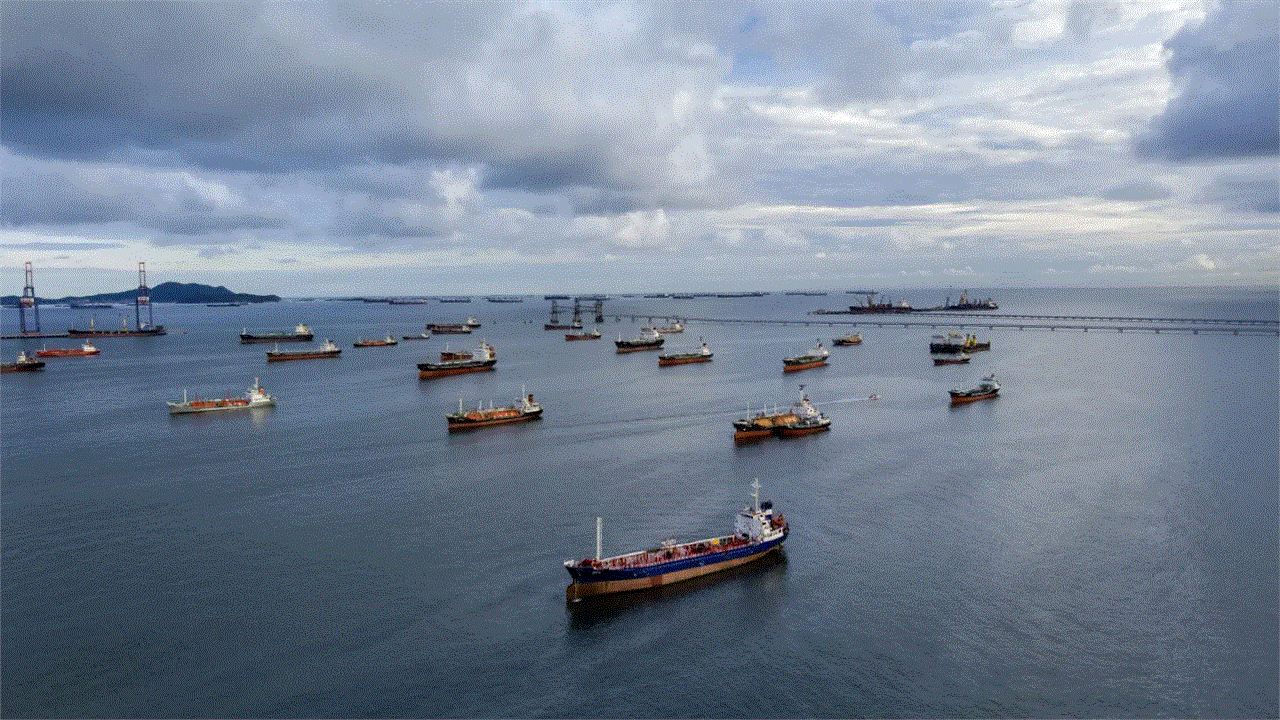
Shipping plays a fundamental role in the global energy system, serving as the primary means of transporting energy resources across international markets. Crude oil, liquefied natural gas (LNG), coal, refined petroleum products, and increasingly renewable energy components are heavily dependent on maritime transport to reach production hubs, industrial centers, and consumers worldwide. More than 80% of global trade by volume is carried by sea, making shipping an indispensable link in ensuring energy security, market stability, and the continuous operation of national economies, according to the UNCTAD. Strategic maritime routes, such as the Suez Canal, the Strait of Hormuz, and the Panama Canal, are therefore critical not only for trade but also for the uninterrupted flow of global energy supplies, as described in the latest IENE analysis, which is available here.
At the same time, the shipping sector is undergoing a significant transformation as the global energy transition accelerates. Increasing environmental regulations, decarbonization targets, and technological innovation are pushing the maritime industry toward cleaner fuels, higher energy efficiency, and more sustainable operations. Alternative fuels, such as green methanol, ammonia, hydrogen, and biofuels, are gradually emerging as viable solutions for reducing greenhouse gas emissions from shipping activities. Consequently, shipping is no longer viewed solely as a transport mechanism for energy commodities, but also as an essential component of the broader transition toward a low-carbon and more resilient global energy system.
Looking ahead, the role of shipping in global energy supply is expected to remain central despite ongoing structural changes in energy markets and international trade. Continuous investment in resilient infrastructure, maritime security, digitalization, and low-carbon technologies will be essential for maintaining efficient and sustainable shipping operations. International cooperation among governments, energy producers, shipping companies, and regulatory organizations will also play a critical role in addressing future challenges and ensuring stable energy flows. Ultimately, shipping will continue to serve as a crucial link connecting global economies, energy systems, and international trade in an increasingly interconnected and evolving world.