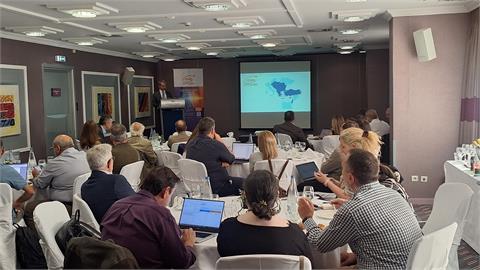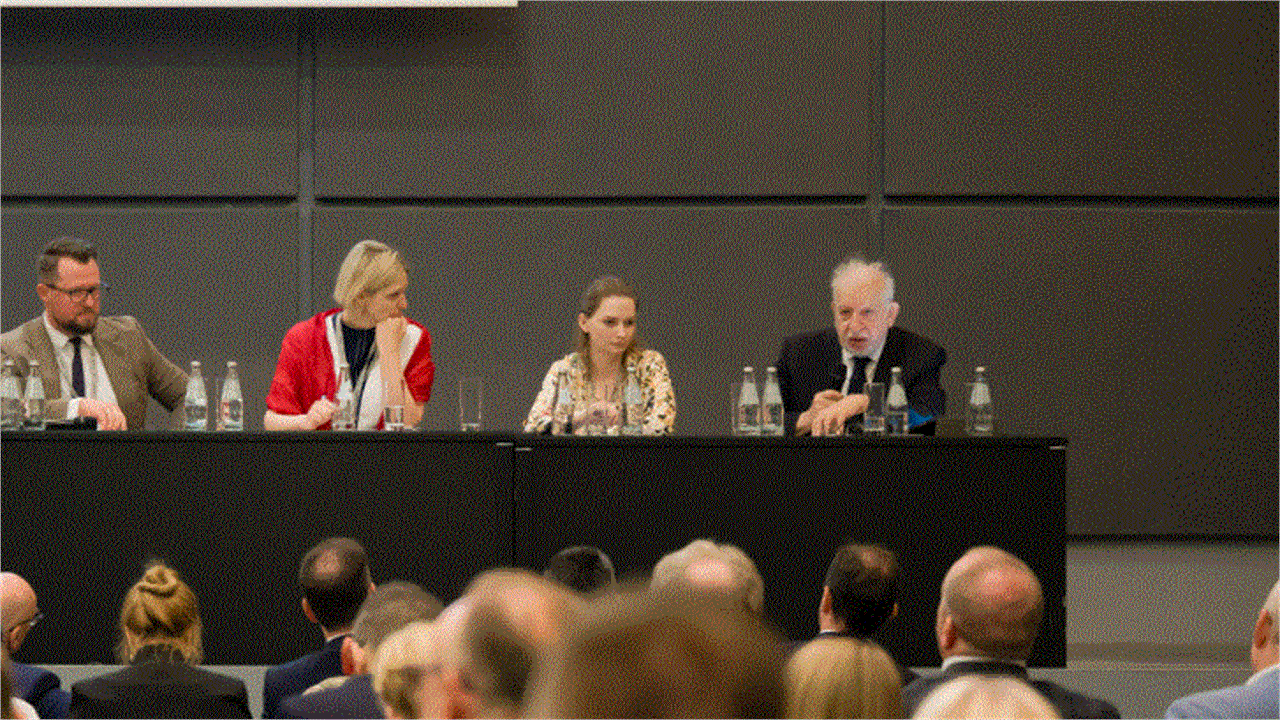
A highly topical discussion on the hybrid threats and the protection of marine energy infrastructure was organised by the Polish Embassy in Athens on June 2 as a side event during the Posidonia Shipping Exhibition. Apparently there are common concerns on energy security and critical infrastructure in the Baltic and the Mediterranean maritime space. As it was made clear during the discussion, which was expertly moderated by Mr.Daniel Piekarski, Head of Energy and Raw Materials at the Ministry of Foreign Affairs of the Republic of Poland, there are mutual risks in both the Baltic and the Mediterranean and hence there is a need for mutual resilience. Following an invitation by the Polish Embassy in Athens the Chairman of the IENE took part in this unique discussion.
The issue of hybrid threats in the Baltic and the need to introduce actual measures to contain them was discussed at length by Ms.Agnieszka Legucka, from the Department of Strategy at the Ministry of Foreign Affairs of Poland and by Ms.Amanda Dziubinska from the Polish Institute of International Affairs. As it was revealed during the discussion an undeclared war by Russian interests is in progress against Polish ( and other Baltic countries) marine infrastructure and shipping in the Baltic by Moscow’s shadow tanker fleet and other vessels.
In his intervention the Chairman and Executive Director of the IENE, Costis Stambolis, identified the primary hybrid threats in the East Mediterranean marine environment before moving to Greece’s Aegean Sea. The issue here, according to IENE’s chairman, is directly related to Turkey’s efforts to check underwater activity by Greece in sea areas in the Aegean Sea which Ankara considers that are part of its sovereignty. In this context Turkey’s navy has repeatedly threatened survey vessels which were preparing the laying of electricity and telecommunication cables ( optic fibres) So in the East Mediterranean, Stambolis said,we are faced with a different type of threat which is more military focused ( such as operation of oil and gas wells offshore Israel or Egypt) in addition to more conventional threats which include the harassment of exploration drill ships offshore Cyprus by Turkey. ( see here for PPP which covers the issues discuss3 during the panel discussion).