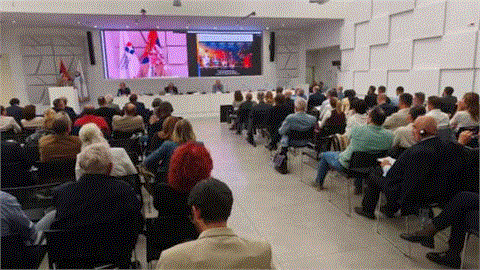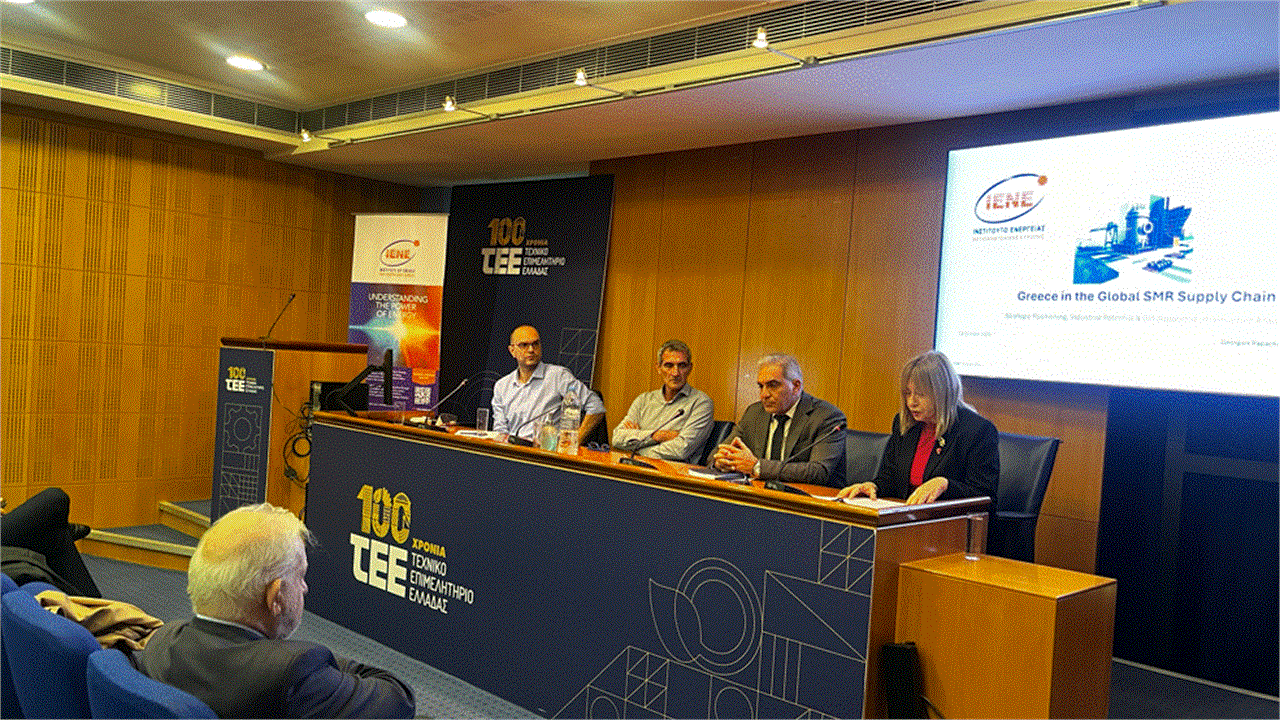
On October 14, the Institute organized a half-day seminar at the lecture hall of the Technical Chamber of Greece (TEE) to present its major latest study titled “Greece in the Global SMR Supply Chain”. The event drew a strong response from representatives of both the scientific community and the broader industry.
The Institute’s latest study, undertaken within its research program on the use of nuclear energy for electricity generation in Southeast Europe (NUPOSEE), comes at a time when the country has expressed—at government level —its intention to explore the potential for developing nuclear energy in Greece.
The seminar opened with introductory remarks by IENE’s Chairman and Executive Director, Mr. Costis Stambolis, followed by an address from the President of the Greek Atomic Energy Commission (EEAE), Dr. Christos Housiadas.
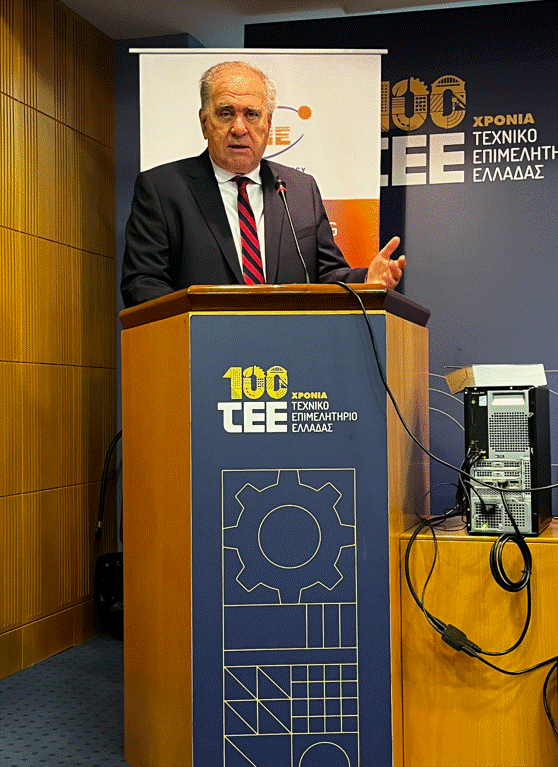
Dr. Christos Housiadas
The study was presented by its author, IENE Research Fellow Mr. George Papachristos—a mechanical engineer specializing in nuclear energy production and industrial processes. As highlighted during the presentation, this IENE study extends beyond the current boundaries of the public discourse on nuclear energy in Greece. That discourse has revolved almost exclusively around—entirely valid—questions of policy principle: whether nuclear energy could form part of the country’s energy mix, what the associated risks and potential costs might be, and whether it would be accepted by the general public.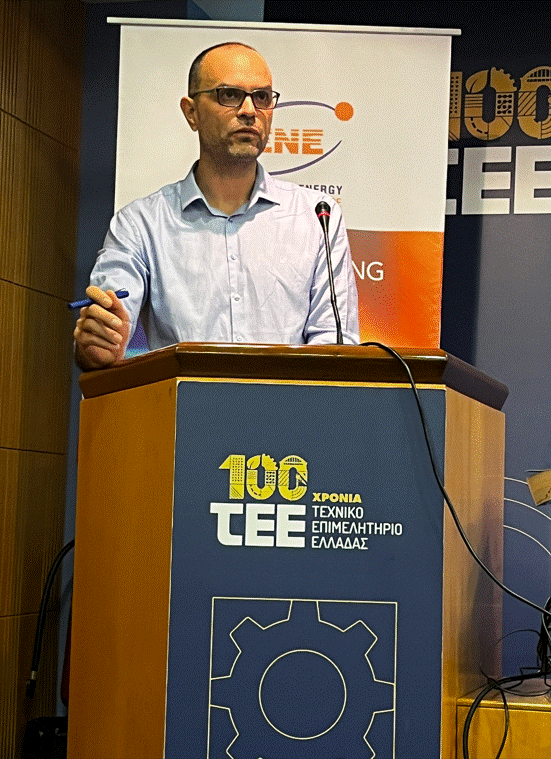
Mr. George Papachristos
In contrast, the question posed by the IENE study—and, by extension, the seminar—is more focused, more specific, and of more immediate practical significance: for the first time, it systematically explores what Greece’s existing industrial base can contribute to the global supply chain for Small Modular Reactors (SMRs), and what steps are required to transform this potential contribution into concrete, contracted industrial participation.
The IENE study is based on multi-method research, which combines systematic literature review, geospatial mapping using GIS systems, assessment of industrial capabilities by sector, and direct consultation with relevant stakeholders.
For her part, Dr. Aliki van Heek—an independent consultant and IENE Research Associate specializing in nuclear energy at the Vienna-based firm Beta Research GmbH—gave an online presentation outlining the various types of modular reactors and providing specific details regarding SMRs.
Dr. Aliki van Heek
This was followed by a round-table discussion with the participation of representatives from the Greek industrial sector, and was expertly moderated by Sofia Politopoulou, an electrical engineer and member of the IENE Steering Committee. The discussion explored the practical challenges and commercial aspects surrounding the participation of Greek companies in the SMR supply chain.
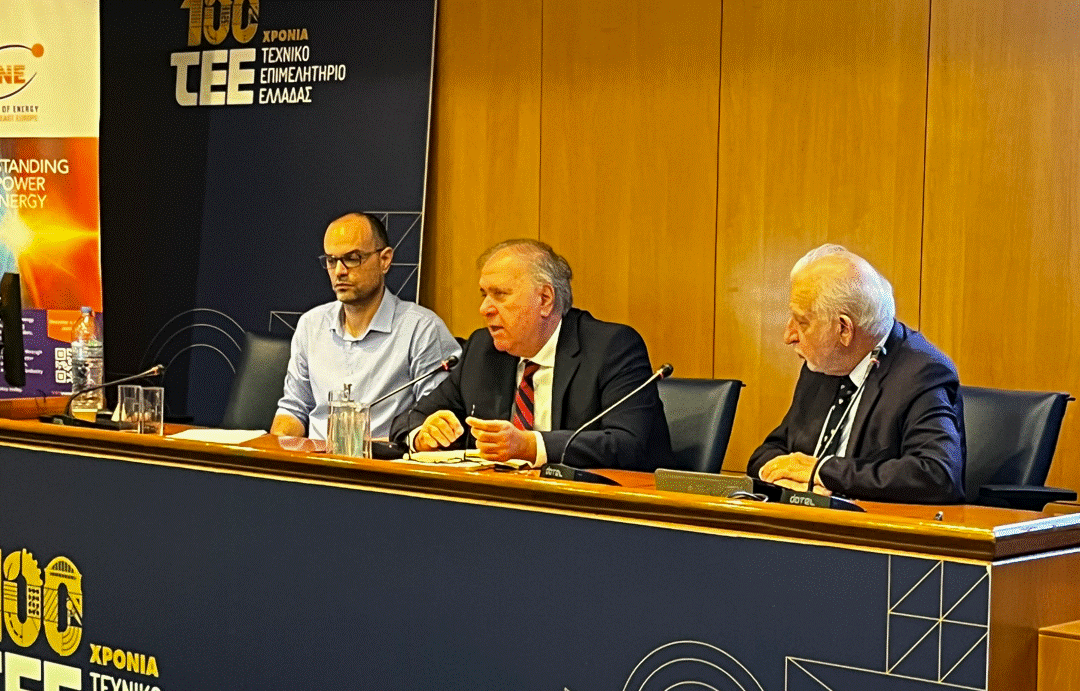
According to the IENE study, Greece has a realistic opportunity in the near future to become part of the global infrastructure used to manufacture SMRs, rather than merely serving as a potential consumer of the energy they produce. The central question put forward by the IENE study—and the focus of the roundtable discussion—is the need to systematically investigate, for the first time, what Greece’s existing industrial base can offer to the global SMR supply chain, and what steps are required to translate this potential contribution into actual, contract-based industrial participation.
Participants in the discussion included Mr. Ioannis Dimoulis, a naval architect and General Manager of SpectrumNDT—a company active in NDT (Non-Destructive Testing) services for the industrial, maritime, and energy sectors—as well as Mr. Simos Pantelidis, Account Manager for Defense & Security, Maritime & Energy at ONEX Technology Systems & Business Solutions SA, and the author of the study.
The IENE seminar concluded with a summary of the proceedings and the presentation of key conclusions by the Chairman of IENE, Mr. Costis Stambolis.