Europe is once again confronting a serious energy security challenge as escalating hostilities between the United States and Iran coincide with the continuing war in Ukraine. Disruptions around the Strait of Hormuz, attacks on shipping in the Red Sea and repeated strikes on Russian energy infrastructure are placing additional pressure on an already strained global energy system. Oil and natural gas prices have risen sharply, while concerns over declining inventories, constrained shipping routes and insufficient gas storage are intensifying fears of a broader economic shock. At the same time, European government bond markets are coming under pressure as borrowing costs rise, raising concerns about the fiscal consequences of prolonged energy-driven inflation, as described in the latest IENE analysis, which is available here.
For Europe, the timing is particularly difficult. The continent has spent the past several years reducing its dependence on Russian pipeline gas and attempting to strengthen its energy resilience through LNG imports, renewable generation, new interconnections and demand reduction. Yet the current crisis illustrates that replacing one source of vulnerability with a more diversified but highly interconnected global energy system does not eliminate risk. Europe remains exposed to developments far beyond its borders, from geopolitical tensions in the Middle East to disruptions in Russian refining and maritime trade. If these pressures persist into the winter, the consequences could extend well beyond energy markets, affecting inflation, industrial competitiveness, household finances, monetary policy and economic growth.
The current crisis represents one of the most serious tests of Europe’s energy strategy in years. The lesson should not be that the energy transition must be abandoned. Rather, it is that the transition must be accompanied by a much stronger emphasis on energy security, affordability and physical resilience. Europe needs greater diversification of oil and gas supplies, sufficient strategic storage, stronger electricity and gas interconnections, additional LNG infrastructure and better protection of critical energy infrastructure. It also needs reliable electricity generation capable of supporting the system during periods when renewable output is insufficient.
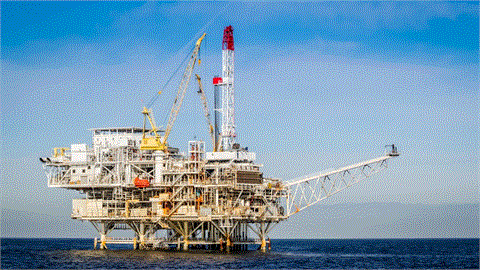
The debate over Europe’s own conventional energy resources should also be reconsidered in the context of energy security. Europe possesses domestic hydrocarbon resources that, although insufficient to eliminate dependence on imports, could potentially contribute to supply resilience if developed under appropriate economic and environmental conditions. Together with renewables the EU needs to develop its own hydrocarbon resources so as to lessen its dependence on oil and gas imports and thus help balance out consumer prices. At the same time, relaxing some environmental rules, particularly those relating to CO? costs and taxes, could help moderate steep increases in electricity and gas prices and maintain much-needed competitiveness at the enterprise level.