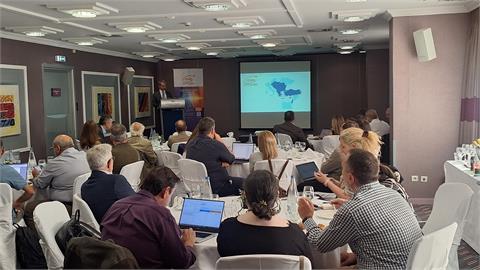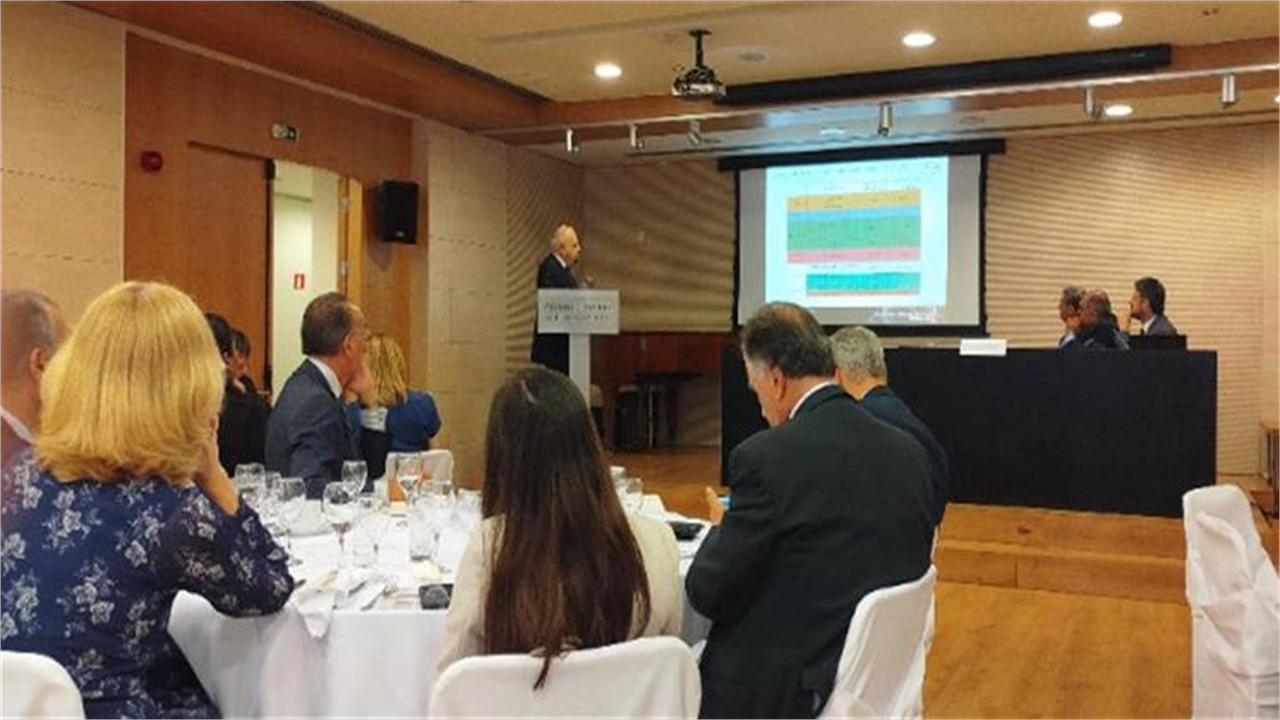
On, June, 5, IENE’s Chairman, Mr. Costis Stambolis was the Keynote speaker at a special event in the “House of Cyprus”, organized by the Embassy of the Republic of Cyprus in Athens in the framework of the Cyprus Presidency in the EU. Held under the auspices of HE the Ambassador of the Republic of Cyprus to the Hellenic Republic, Mr. Stavros Avgoustides, the “Diplomatic Briefing” of the Embassy focused on the “Energy Security in the European Union and the Strategic Role of Cyprus and Greece in the Eastern Mediterranean”.
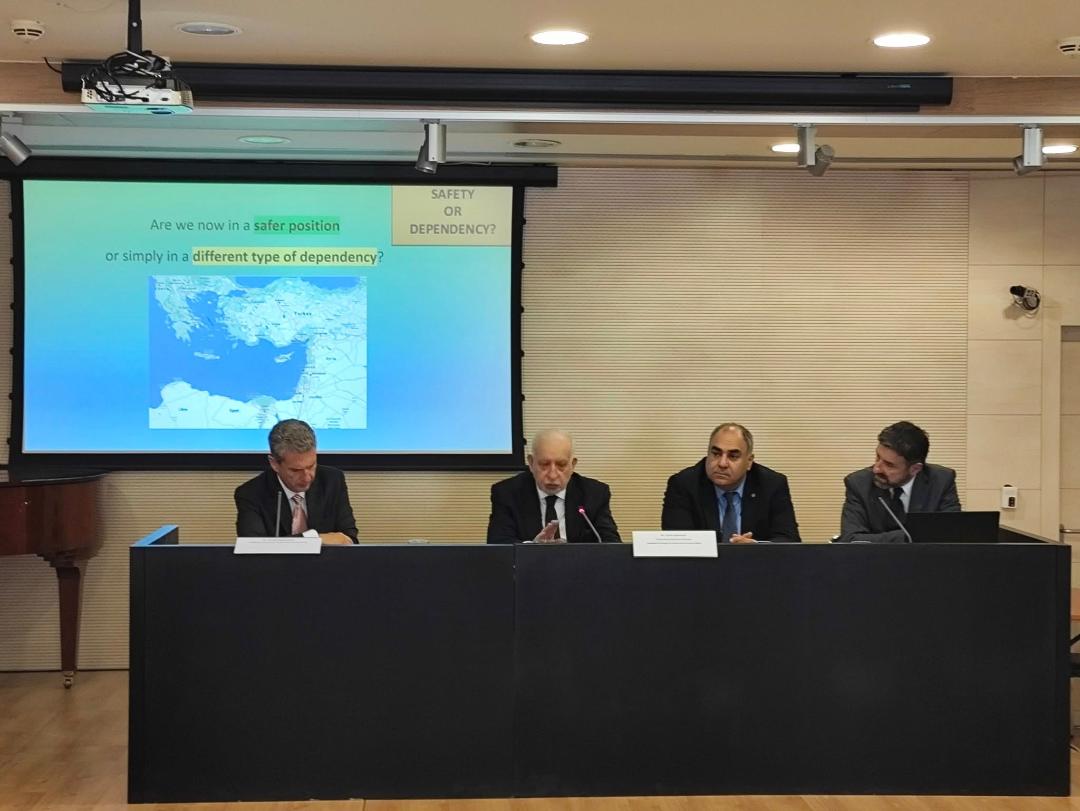
The Chairman of IENE had the opportunity to present the “South East Europe Energy Outlook 2025/2026”, the Institute’s flagship study, outlining the energy demand characteristics and the investment prospects in the energy sector of SE Europe and the Eastern Mediterranean. As he stressed, the greatest part of the total €711 bn to be invested in the region by 2035 will mainly head to power generation and grids, however, the prospects in the oil and natural gas exploration sectors appear to be rising compared to previous estimates. The current geopolitical upheaval in the broader Middle East has encouraged the interest of big energy groups for the region, as the case of Greece, with ExxonMobil and Chevron shows.
Underlining that energy transition in SE Europe should not be one-dimensional and hasty, Mr. Stambolis raised the problem of energy poverty and of low income, that, combined with the vast number of residencies that lack energy efficiency and the scarcity of alternative sources of energy supply, are the main menaces of the region.
A Fireside Discussion, between the Chairman of IENE and Andreas Papastamou, Professor of European Economy at the Panteion University, Athens, followed, highlighting issues of energy security in the EU and the strategic importance of the economic zones of Cyprus and Greece in the Eastern Mediterranean. Mr. Stambolis stressed that the EU, although it bears the experience of the Ukraine crisis and its energy repercussion, has not opted for higher indigenous energy production, but rather it has come to a different type of dependency, exchanging Russian gas supplies with those from the US.
In that framework, he referred to the energy prospects of Cyprus and Greece for the energy security of the EU, focusing on their potential as oil and gas producers. However, it will take a lot more work and exploration activity before these two countries could become net energy exporters, mainly for gas, to Europe.
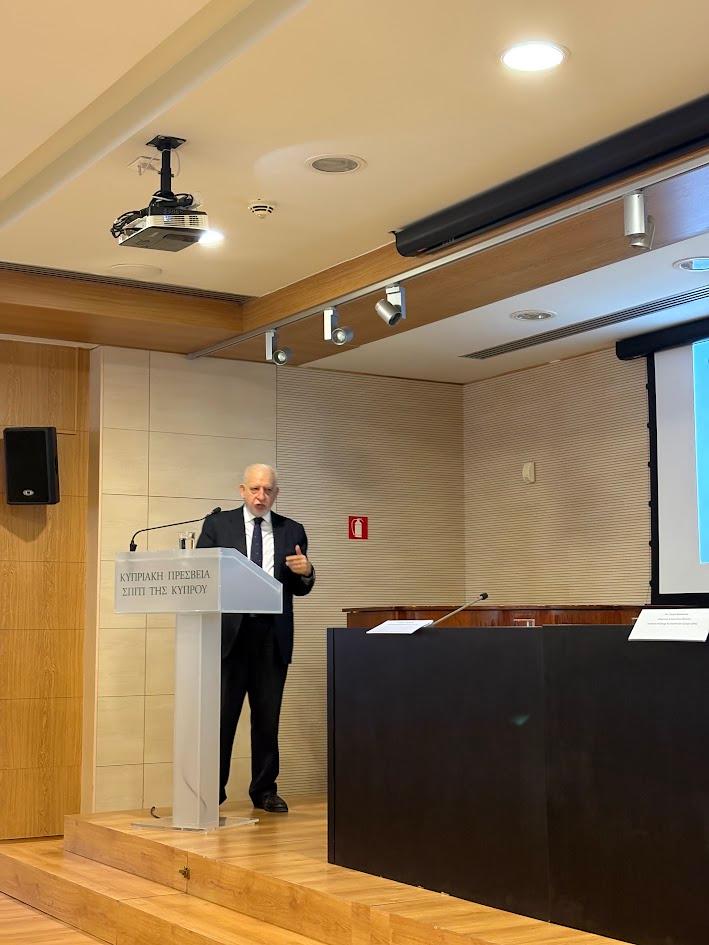
Overall, the Chairman of the Institute commented that today there is close energy cooperation among the countries of the Eastern Mediterranean and SE Europe, despite the geopolitical challenges and the individual national interests of each country. Mr. Stambolis also stressed the role of Greece and Cyprus in strengthening regional energy cooperation on issues related to electrical interconnections and hydrocarbon exploration and production.
Finally, the Chairman of IENE referred to the strategic importance of energy projects for the energy cooperation and security of the countries in the region, e. g., among others, the Vertical Corridor, the Western Natural Gas Corridor, the electrical interconnections of the Aegean islands with Greece’s continental system, as well as the GSI.