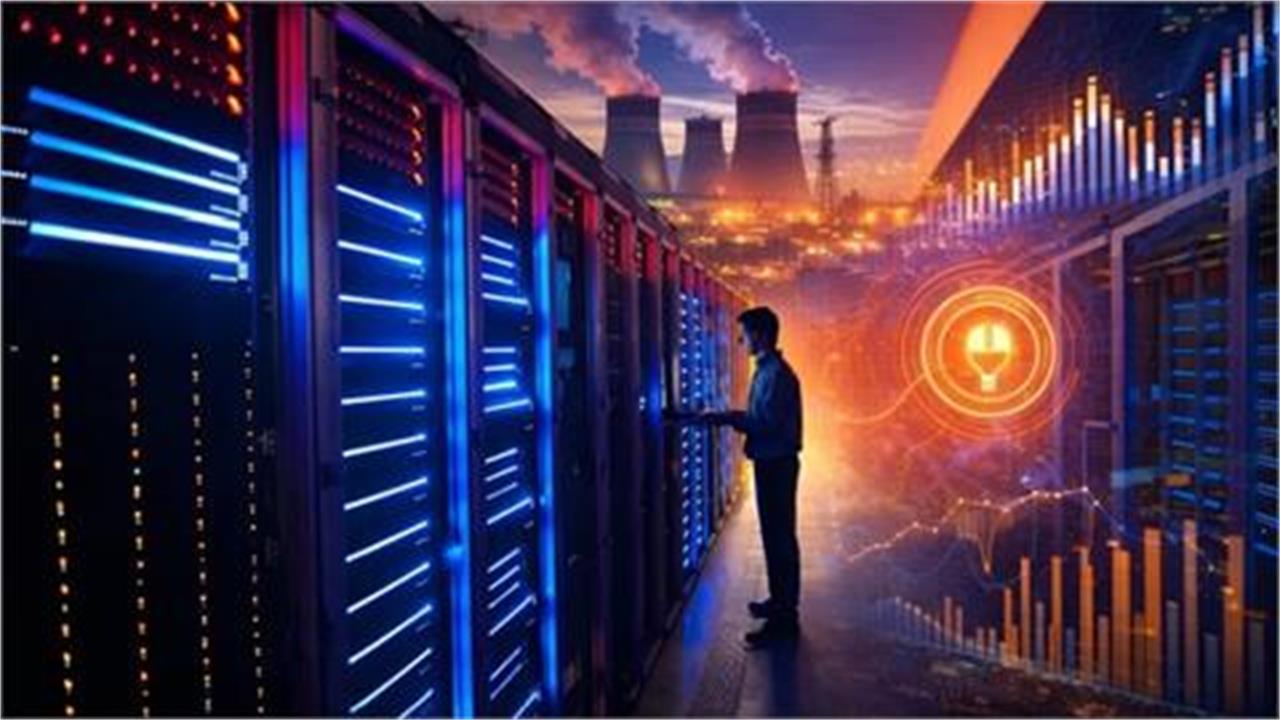
Artificial intelligence (AI), cloud computing, digital services and the Internet of Things are transforming the global economy at an unprecedented pace. At the heart of this digital revolution lie data centres, whose rapid expansion is creating a new generation of strategic electricity consumers. As hyperscale facilities grow larger and more energy intensive, electricity demand from data centres is emerging as one of the fastest-growing components of power consumption worldwide, presenting both major opportunities and significant challenges for electricity systems. Recent studies in Greece have already highlighted the growing importance of electricity grid capacity, renewable energy availability and strategic infrastructure planning in accommodating future data centre investments.
Recognising these developments, the Institute of Energy for South-East Europe (IENE) is preparing a comprehensive regional study examining the impact of data centre deployment on electricity demand across South-East Europe (SEE) and the Eastern Mediterranean. While international experience shows that poorly coordinated data centre expansion can lead to grid congestion, higher electricity prices and costly network reinforcements, very little research has so far been undertaken focusing on the unique characteristics of the SEE region. Yet this is precisely where digital infrastructure investment is accelerating, supported by improving connectivity, new submarine cable systems, favourable geographical positioning and increasing interest from global technology companies.
The forthcoming IENE study seeks to fill this important knowledge gap by assessing how data centre development could reshape regional electricity demand over the next 10, 20 and 30 years under a range of alternative scenarios. Drawing upon the advanced modelling methodology developed for the SE Europe Energy Outlook 2025/2026, the study will evaluate the interaction between digitalisation, electrification, renewable energy deployment and long-term decarbonisation policies. Beyond forecasting electricity consumption, the analysis will examine implications for generation capacity, transmission and distribution networks, investment planning, system flexibility and energy security.
The study will also explore how data centres can become an integral part of the energy transition rather than simply a source of additional demand. Through long-term renewable power purchase agreements, co-location with renewable generation and storage facilities, demand-side flexibility, waste heat utilisation and innovative energy management solutions, data centres could evolve into strategic partners for modern electricity systems. By providing policymakers, regulators, system operators and investors with robust analysis and practical recommendations, IENE's forthcoming study aims to contribute to informed decision-making and support the sustainable development of one of the region's fastest-growing digital industries.
This latest IENE study is being carried out under the context of three of the Institute’s main Research Programmes. Namely, Electricity and Gas Market Dynamics in SE Europe, Regional Energy Security, and Innovation in Energy.