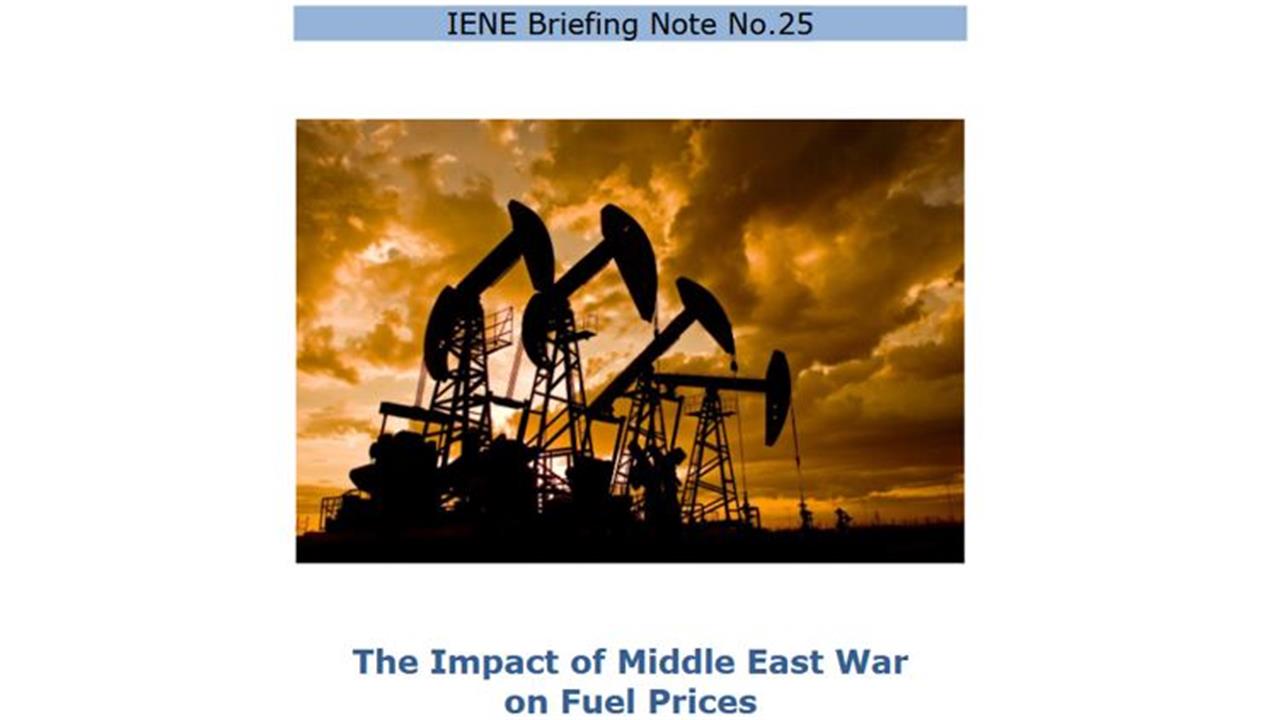
The current war in the Middle East has once again highlighted the region’s central role in the global energy system and its influence on fuel prices. As a major hub for oil production and export, any escalation in conflict raises immediate concerns about supply stability. Even when physical disruptions are limited, uncertainty alone can unsettle markets, prompting precautionary behavior among producers, traders, and governments. This environment of instability makes fuel prices highly sensitive to ongoing developments in the region, as clearly analysed in the latest IENE Briefing Note, which is available here.
In the short term, fuel prices tend to rise as fears of supply interruptions grow. Key risks include damage to energy infrastructure, reduced production capacity, and potential disruptions to critical shipping routes that facilitate global oil trade. Additionally, geopolitical tensions may lead to sanctions or strategic production decisions that further constrain supply. Financial markets also react quickly, with speculative trading amplifying price movements as investors attempt to anticipate future shortages or shifts in demand.
The broader economic consequences of rising fuel prices are far-reaching. Higher energy costs increase the price of transportation, manufacturing, and essential goods, contributing to inflationary pressures worldwide. For households, this translates into higher living expenses, while businesses face tighter margins and uncertainty in planning. Governments may respond with policy measures such as subsidies, tax adjustments, or efforts to diversify energy sources, underscoring the ongoing challenge of managing economic stability amid geopolitical conflict.
Latest IENE Briefing Note Focuses on the Impact of Middle East War on Fuel Prices
Wednesday, 20 May 2026