Over the last few years, the Institute has paid particular attention to energy efficiency and, through a series of seminars and papers, has examined energy efficiency improvement in the whole range of applications spanning industry, transportation and the built environment. Through its studies, IENE has showed that substantial benefits to the economies of the countries in the SE European region could accrue through the application of approved auditing standards and the attainment of agreed targets, especially in the building sector. In the Institute’s recently completed major study, the “SEE Energy Outlook 2025/2026”, to be released early in the new year, two whole chapters are devoted to energy efficiency issues (Chapter 16 on Energy Efficiency in SE Europe, and Chapter 17 on Energy Poverty in SE European Countries). Both of these chapters are authored by Costas Theofylactos, Deputy Chairman of IENE and head of the energy efficiency committee of the Institute.
Over the coming months in 2026, the Institute is planning a series of activities related to energy efficiency including a one-day seminar in Athens, on February 26, organised jointly with the Technical Chamber of Greece, and a 3-week professional training course for engineers on energy efficiency applications for buildings to take place during March-April. In addition, a review report is to be completed on energy efficiency benefits achieved in the SEE region from 10 years of applications.
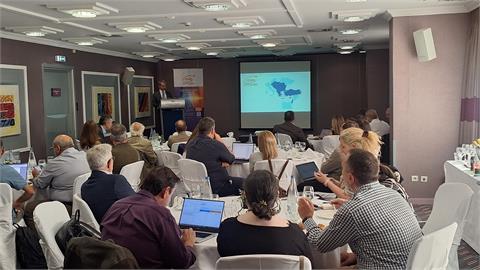
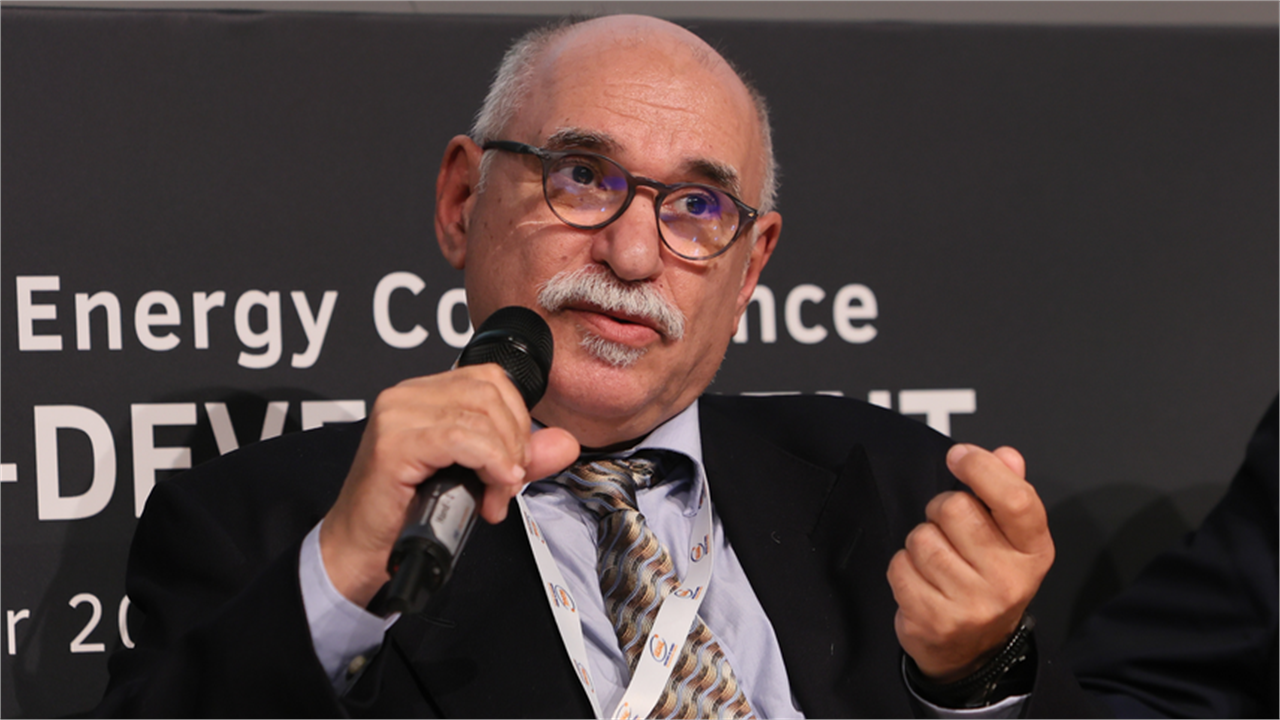
Indicative of IENE’s strong interest in energy efficiency issues was the session on the “Improvement of Energy Efficiency in Buildings and Industry” which was organised in the context of the Institute’s annual “Energy& Development” conference, which took place on November 11/12, 2025, in Athens and was moderated by Costas Theofylactos. The session included four speakers who presented and discussed the current state of energy efficiency including the EU, in Greece and Cyprus. Two speakers delivered brief presentations,while the other two joined in the subsequent discussion.
Mr. Vourgidis, a researcher at the Electrical Engineering Department at the National Technical University of Athens (NTUA), presented the outcomes of the EU-funded LIFE Programme project “Audit-2-Measure.” He shared key findings, noting that high-energy costs are a major concern for most industries surveyed. While companies generally view their climate commitments positively and recognize further potential for savings, few have implemented certified energy management systems, despite most having dedicated internal staff for energy management. Investment decisions for Energy Saving Measures are primarily made by top management, with internal energy staff and auditors serving in advisory roles. Although most industries conduct energy audits, the proposed Energy Efficiency Measures (EEMs) are often not implemented, as this is not mandated by the Energy Efficiency Directive (EED) or local legislation.
Ms. Charalampous, a senior energy expert from Cyprus, presented the European Qualifications Framework with a specialization in Energy Efficiency (“Fit for 55”), based on the EED, RES Directive, RED II, and RED III. She highlighted a significant short- and long-term increase in demand for certified professionals with appropriate skills. While existing certification processes generally ensure the required competency level for most professional qualifications—particularly for engineers in Cyprus—greater short-term needs were identified for technical roles, such as installers of technical systems. Demand is also expected to grow for installers of heat pumps and building envelope specialists. In the medium- to long- term, nearly all professional qualifications and specialties will require more trained professionals to meet the new requirements of the Energy Efficiency, Energy Performance of Buildings, and RES Directives.
In the second part of the session, the discussion focused on the importance of energy audits for industry and the role of the revised EED in the energy transition. Mr. Pantelidis, a senior energy expert with extensive experience in energy audits, analyzed the challenges and limitations of industrial energy audits in Greece. Mr. Kollias, an Energy Transition Strategist and EU Climate Pact Ambassador, elaborated on the critical role of energy efficiency in the pathway to achieving 2030 transition goals.