Sanctions can restrict a tanker's access to European ports, finance, insurance and maritime services, but they do not automatically stop it transiting European waters or give authorities the right to seize it at sea.
Most sanctioned tankers retain recognized national registration and keep moving. In the 30 days to 26 August, 60 sanctioned tankers were recorded in UK-attributed waters, and none showed a false-flag indicator, suggesting operators are adjusting to that enforcement gap. Of 44 sanctioned tankers leaving the Baltic over the same period, 30 bypassed the Channel. Of the 14 that used it, 13 were Russian-flagged. Sanctions are changing how the fleet operates without changing where it can sail.
Market & Trading Calls:
- Risk is migrating from the vessel to the registry - enforcement now turns on whether a flag is valid rather than whether a vessel is designated, making flag quality the variable that separates otherwise identical tonnage.
- The pool of usable registries is narrowing - cooperative flag states have de-registered designated vessels in bulk, pushing the fleet toward a shrinking set of options and, briefly, toward direct Russian registration.
Sanctions can isolate a tanker commercially without stopping it physically
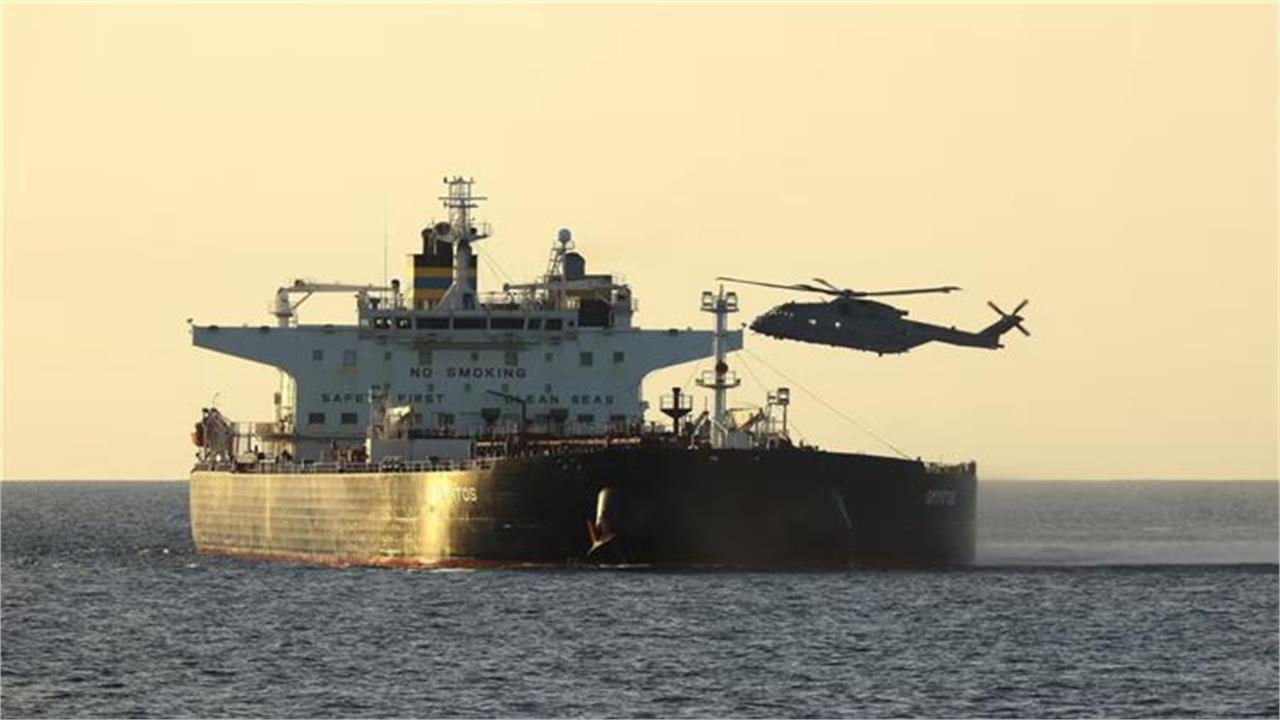
UK Royal Marines boarded SMYRTOS (IMO 9389100) in June not simply because the tanker was sanctioned, but because it was suspected of being without nationality. Cameroon had removed the vessel from its register before the interception, leaving it without confirmed nationality.
The UK government said suspected statelessness provided the basis to verify SMYRTOS under UNCLOS Article 110. Once the vessel was determined to be stateless, Britain could use domestic sanctions and maritime-enforcement powers against it. The distinction matters because sanctions identify the vessels authorities want to act against, but designation alone does not automatically create a right to board a foreign tanker at sea.
That distinction is now visible in vessel movements. In the 30 days to 26 August, 60 sanctioned tankers entered UK-attributed waters, yet none showed a false-flag or statelessness indicator in the available data. Over the same period, 30 of 44 sanctioned tankers leaving the Baltic avoided the Channel and sailed around northern Britain instead, adding roughly a day of travel. Of the 14 that did use the Channel, 13 were Russian-flagged. The routing split suggests operators are increasingly pricing flag-related enforcement risk into their voyages.
Valid national flags keep sanctioned tankers moving through European waters
The operational mechanism is a gap between sanctions and maritime jurisdiction. UK and EU sanctions can restrict port access, insurance, finance and maritime services, but they do not by themselves cancel a vessel's right to transit European waters.
That matters particularly in the Dover Strait. Ships passing between Britain and France benefit from the international-law regime of transit passage, which protects continuous navigation through international straits. A sanctioned tanker with a valid national flag can therefore remain designated while continuing through the Channel, even though it may be barred from ports or prohibited from receiving certain services.
The position changes when the vessel's nationality becomes uncertain. If a registration has been withdrawn, falsified or cannot be verified, authorities may have grounds to suspect the vessel is stateless. That can open an additional legal route to boarding and verification at sea. Other offences and enforcement powers may also apply, so flag status is not a universal test of suitability. But it is becoming a key indicator of practical interdiction risk.
This makes verified flag status and flag history materially different from the flag shown in AIS or commercial databases. SMYRTOS demonstrates the gap as commercial vessel data continued to show Cameroon even though Cameroon said the registration had already been cancelled.
Russian-flagged tankers keep using the Channel while alternative registries disproportionately take the longer route
Of 44 sanctioned tankers that left the Baltic in the 30 days to 26 August, 30 or 68% sailed around northern Britain rather than through the Channel. The detour is short with roughly 300 nautical miles, or about one extra day at 12 knots. The strongest split is by flag. Russian-flagged vessels accounted for 13 of the 14 tankers that used the Channel, against 4 of the 30 that took the longer route at 93% versus 13%.
Why does this matter? A Russian registration makes the vessel's nationality difficult to challenge on statelessness grounds, even when the tanker itself is sanctioned. RUSI, cited in a House of Commons Library briefing on shadow-fleet interdiction, notes that the shift toward Russian reflagging appears designed to close the statelessness route used in recent interdictions.
The bypass cohort, by contrast, is concentrated under Sierra Leone (11), Equatorial Guinea (7), Oman (4) and Panama (3). That does not mean those flags are invalid or that every vessel taking the northern route fears seizure. The result is a measurable split as Russian-flagged high-risk tankers are disproportionately staying on the shortest route, while alternative vessels are disproportionately going around Britain.
Sanctioned tankers regularly transit UK waters, but few show an obvious vulnerability
Over the same 30-day period, 914 distinct tankers entered UK-attributed waters. Sixty were sanctioned, and on an average day 5.5 sanctioned tankers were present.
The key point is that sanctioned does not automatically mean boardable at sea. None of the 60 showed a false-flag or statelessness indicator in the available data. Twenty-one, just over a third, were Russian-flagged. That does not prove none could legally have been interdicted. Commercial vessel data cannot establish legal nationality on its own, and there may be other grounds for enforcement. SMYRTOS itself proves the limitation as its displayed flag did not reflect its underlying legal status. Most sanctioned vessels also move through quickly. Median dwell was two days, and 56 of the 60 were gone within three days. UK and European waters are primarily a transit corridor for this fleet, not a destination.
The broader conclusion is that designation does not stop physical movement. Sanctioned operators have adapted by preserving recognized nationality and, where they perceive that protection to be weaker, by changing route.
(MarineTraffic, August 28, 2026)