Bloc’s energy commissioner warns the continent is already facing its ‘worst winter’ for energy prices since 2022.
The EU’s energy commissioner has urged Donald Trump to maintain a “free flow” of diesel following the US president’s threat to cut off supplies, warning Europe already faces its “worst winter” for energy prices since 2022.
Dan Jorgensen told the FT that it was in both the US and Europe’s interests to “have as free a flow of energy between our countries as possible”. But even with uninterrupted US diesel supplies, “this winter might be very, very bad [for Europe] and it might be the worst one we’ve had since 2022”, he said.
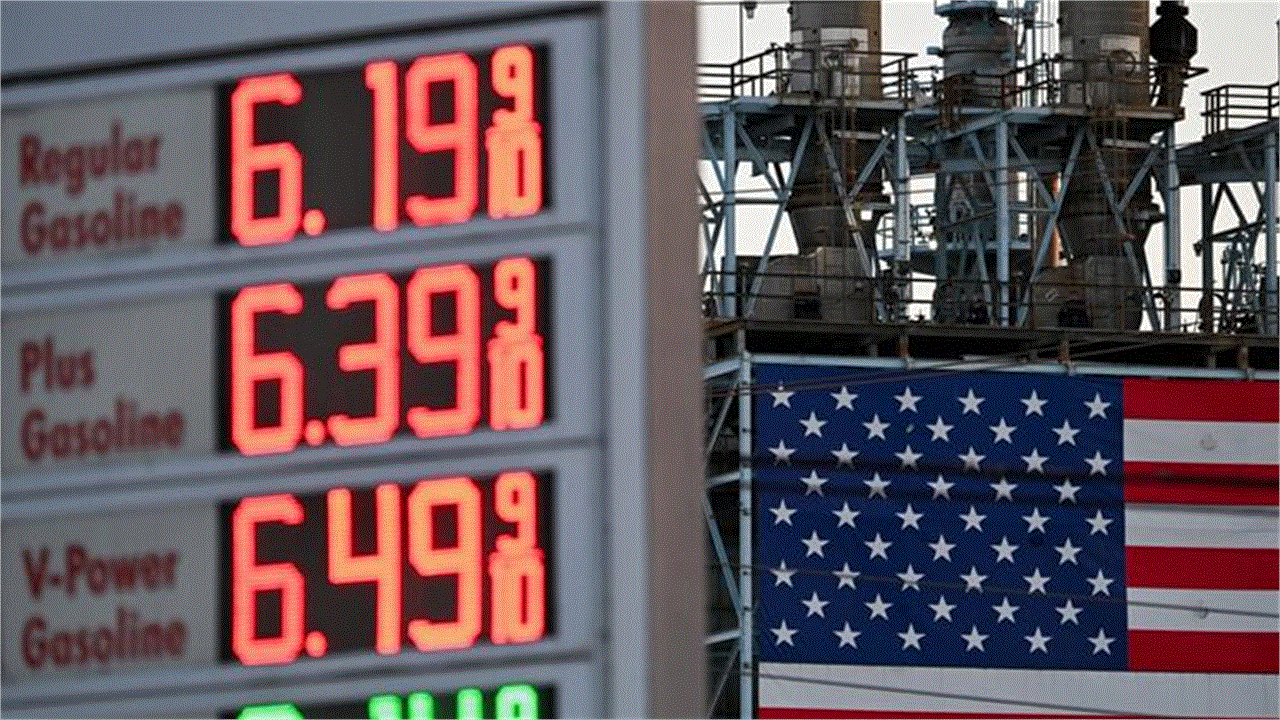
European diesel prices are close to record highs. Trump rattled the market earlier this week when he said he would back a ban on diesel exports — a move traders warned would be “catastrophic” for Europe as the US is its biggest supplier.
Although US energy secretary Chris Wright later cast doubt on the merits of a full embargo, the threat is the latest challenge to Europe’s energy security as the conflict in the Middle East continues to disrupt global energy supplies.
European natural gas prices recently hit their highest level since the 2022 crisis triggered by Russia’s full-scale invasion of Ukraine, while Brent crude oil is still trading above $100 a barrel.
Jorgensen said the European Commission was assessing short-term measures to lower the price of fossil fuels in the EU after French President Emmanuel Macron earlier this week called for immediate action, including the postponement of stricter conditions on methane imports and a softening of rules on fuel refining.
Jorgensen declined to discuss Macron’s individual proposals but said: “He’s right in his analysis?.?.?. sometimes you have to postpone things or make things more flexible, and this is also my general approach to this coming winter?.?.?.?without deviating from our overall targets and ambitions.”
Asked specifically about a possible delay to new requirements for importers of oil and gas to monitor and restrict methane emissions, Jorgensen responded: “You will see us in the coming weeks and months showing different levels of flexibility that member states have asked for.”
Later on Friday, an official confirmed that Jorgensen had instructed the Commission to look into a one-year postponement of the methane rules.
Europeans are already paying more than €30 extra for a tank of diesel compared with before the US-Iran war, according to the NGO Transport & Environment.
Increased output by US and European refineries has allowed EU countries to continue to import enough diesel and jet fuel to avoid supply crises.
But the Trump administration is under pressure over domestic diesel prices ahead of midterm elections in November. If the US does cut off supplies of the fuel, analysts have said it will send prices surging across the rest of the world.
Jorgensen said he hoped to avoid that outcome but he wanted to sound the “alarm” ahead of a meeting of EU energy ministers in Dublin next week.
He urged member states to lower taxes on electricity and invest more in green energy, making use of flexibilities the Commission has introduced in its fiscal rules to do so. Only Italy and Greece had done this so far, he added.
“The most likely scenario is that we will have very, very high prices but not security of supply issues,” he said. “For people who cannot afford fuel it doesn’t really matter whether the fuel is there or not if they cannot buy it.”
Jorgensen repeated earlier warnings that Europe must speed up electrification to avoid future fossil fuel-related crises. The Commission has proposed a doubling of the EU’s electrification rate to 46 per cent by 2040 and measures to make states tax electricity at a lower rate than gas.
“If we do not move away from this dependency on fossil fuels, then I can promise everybody it will be a permanent crisis,” he added.
(Financial Times, September 25, 2026)