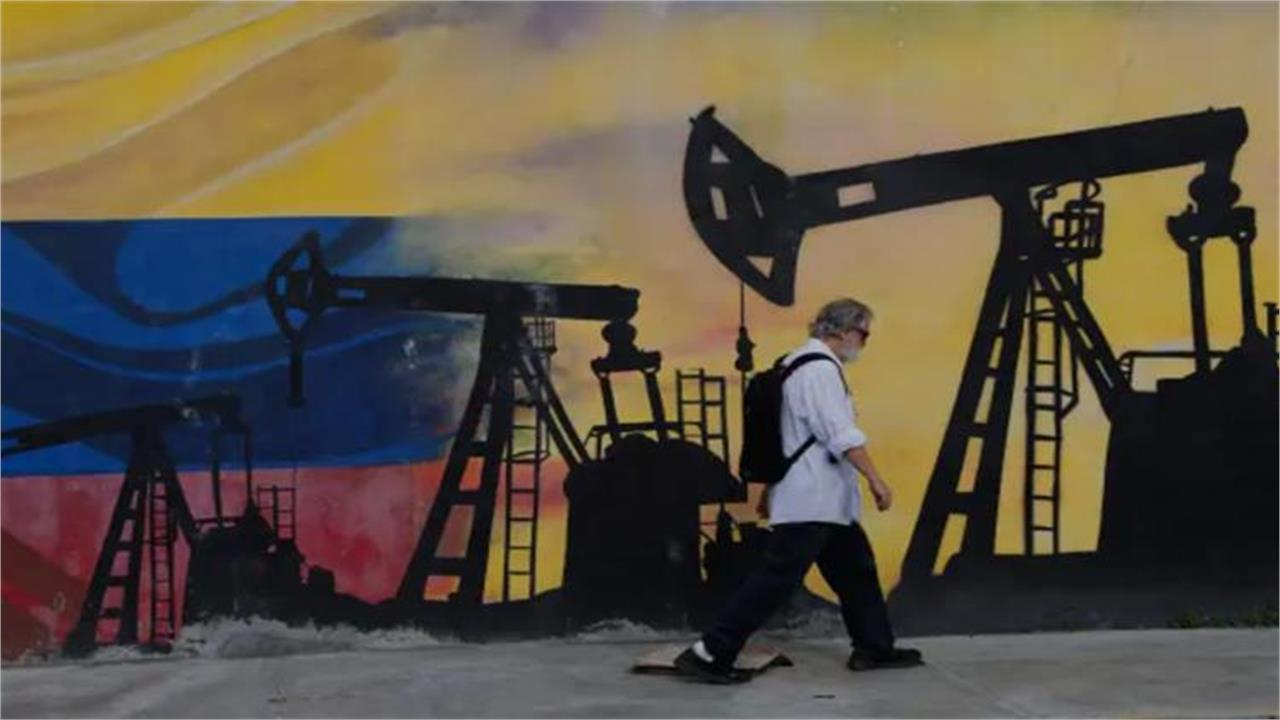
U.S. President Donald Trump’s plan to seize direct control of Venezuela’s oil reserves is prompting warnings that the Latin American nation will become a modern-day resource colony akin to the banana republics of a century ago — something that could create long-term risks for oil companies operating there.
Trump said late Friday that a deal had been reached with Venezuela’s interim president, Delcy Rodriguez, in which the U.S. will control more than 65 billion barrels of oil “through a partnership with private business.”
Although additional details are scarce, the plan is stunning in its size and ambition. The new venture will have a 100-year concession over 17 oil fields, making it the second-largest corporate holder of proven reserves after Saudi Aramco, according to a U.S. official.
Still, reviving Venezuela’s oil sector is likely to require massive investment from the private sector. New commercial agreements may come as soon as this week.
Chevron and other U.S. energy companies are negotiating deals to expand in Venezuela, though the talks are separate from direct U.S. investments in the country’s oil fields, people familiar with the matter said late last week. Alejandro Betancourt, a controversial Venezuelan oil tycoon who recently emerged as a key middleman between Washington and Caracas, is discussing a partnership with the U.S. Department of Defense.
The developments are spurring analysts and academics to look back to an earlier era of neocolonialism, when the U.S. exerted outsize power over Latin America and its natural resources. That strategy, employed through much of the 20th century, stirred popular unrest, several coup d’etats and the erosion of democracy, conditions that contributed to expropriation and nationalization of foreign-owned oil assets.
The troubled history of Venezuela’s oil offers a cautionary tale.
The country was once dominated by U.S. and European operators and was among the world’s largest producers. But assets owned by ExxonMobil Holdings and ConocoPhillips were seized and nationalized during political upheaval in the 2000s. Chevron was the only U.S. driller to retain a toehold.
A test for Trump and his allies will be whether their current series of deals can avoid similar reversals in the future. The White House didn’t immediately respond to a request for comment.
“If I were an investor in Venezuela right now, I would be asking myself if there’s going to be a government in the future that will repudiate the contracts,” said Francisco Rodriguez, a Venezuelan economist and professor at the University of Denver.
The announcement of the new U.S. venture comes almost eight months after the dramatic capture by U.S. special forces of Rodriguez’s predecessor, Nicolas Maduro. In the immediate aftermath, Trump laid out his vision for what he called the Donroe Doctrine — a 21st century version of the Monroe Doctrine that warned European powers against interfering in the Western Hemisphere.
He was also clear the raid was as much about oil as it was about the narco-terrorism and drug charges leveled against the now incarcerated strongman leader. Reviving Venezuela’s battered oil sector via massive investments from U.S. producers, he said, would boost the Latin American country’s ailing economy while helping to lower gasoline prices for Americans.
Since then, the U.S. president has been frustrated by those companies’ caution about reentering Venezuela. The idea of securing additional crude supply just across the Caribbean from the U.S. has taken on a new urgency as Iran continues to limit supply through the Strait of Hormuz and keep global energy prices elevated.
Still, despite the rhetoric from Trump (in May he posted on social media a map depicting Venezuela as the 51st state of the U.S.), few foresaw such a bold attempt to grab a direct stake in another nation’s oil wealth.
Venezuela is “functioning as a protectorate of the U.S. in all but name,” Francisco Rodriguez said. This arrangement “isn’t furthering the interests of Venezuelans. It’s about securing the economic and security interests of the United States.”
Alejandro Velasco, an associate professor of history at New York University, compared the situation to the to the United Fruit’s plantations in Central America in the first half of the 20th century. That gave the company vast leverage over governments, inspiring the term banana republic. U.S. support for the regime in Guatemala, for example, ended democratic reforms and ushered in decades of authoritarian rule and civil war.
The Venezuelan people “are entirely at the whims of whatever the U.S. government, by way of these companies, is going to give to them,” he said. “Venezuela is a client state now.”
Venezuela announced itself as an oil powerhouse in 1922 when a subsidiary of what is now Shell drilled a well that blew crude some 200 feet high in the air near Lake Maracaibo. Subsidiaries of companies that later would be absorbed by ExxonMobil and Chevron entered the country and production to rose rapidly.
Venezuela was the largest crude exporter by the end of the 1920s. Foreign companies produced about 94% of its oil by the 1940s, leading to decades of tension between the country’s government and private investors over how to divide the spoils.
In an effort to retain more revenue, Venezuela became a founding member OPEC, and in the 1970s it nationalized its oil industry. After a period of steadily declining production, in the 1990s the country opened up again to foreign oil companies, before socialist President Hugo Chavez once again took control of the oil fields in the mid-2000s, accusing the U.S. of “domination, exploitation and pillage.”
“Oil infrastructure was taken like we were babies,” Trump said Jan. 3. “America will never allow foreign powers to rob our people or drive us back into and out of our own hemisphere.”
U.S. oil executives have been meeting constantly with Venezuelan and U.S. officials in Caracas, Houston and Washington in recent months. Delcy Rodriguez signed a new hydrocarbons law earlier this year that loosened state control over the country’s oil fields.
Chevron, ConocoPhillips and ExxonMobil declined to comment last week on the negotiations.
But the few deals with foreign oil companies signed so far — among them, little-known but well-connected U.S. companies such as Lionheart Capital and Pacific Coast Energy — have been negotiated bilaterally and without competitive bid rounds or regulatory oversight, in contrast to lease sales in other established oil-rich nations including the U.S., Brazil, Norway and Angola.
The opaque process stands in contrast to the competitive environment Venezuela fostered in the 1990s when it last invited Big Oil to help produce its crude, and is perhaps reminiscent of the free-for-all era of Venezuelan dictator Juan Vicente Gomez a century ago.
“Gomez had full control of Congress and many of his family, friends and bureaucrats transferred concessions to foreign oil companies that wanted to enter the country,” said Marcus Golding, a post-doctoral researcher at the University of Texas. “There was a lot of opacity. I see a lot of parallels to what’s happening today.”
(Bloomberg, August 31, 2026)