Agreements for Serbia and North Macedonia to join the Vertical Gas Corridor (VGC) could be signed in September by the operators of the interested transmission networks, Greek Environment and Energy Minister Stavros Papastavrou stated in an interview with the broadcaster "Antenna 1".
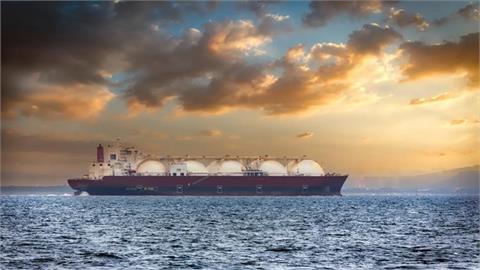
"Serbia and North Macedonia recently came forward and expressed their desire to participate in the VGC. The relevant agreements with the operators will likely be signed in September," the minister stated. Papastavrou emphasized that Greece has already consolidated its role as a regional hub for gas supplies: compared to imports of approximately six billion cubic meters a few years ago, 17 billion cubic meters now enter the country, 11 of which are routed north. "The VGC has already taken shape," he noted. The project does not envisage the construction of a single new gas pipeline, but rather the coordination of national networks, liquefied natural gas terminals, and interconnectors existing or under construction, with the aim of enabling the transport of gas from Greece to Bulgaria, Romania, Moldova, and Ukraine. The extension to North Macedonia and Serbia should create an additional branch in the Western Balkans, increasing the flexibility of regional routes and offering the two countries more direct access to liquefied natural gas imported through Greek infrastructure. The system will be able to utilize, among other things, supplies delivered through the Revithoussa terminal, the Alexandroupoli floating storage and regasification unit, and the Trans-Adriatic Gas Pipeline (TAP).
The political process for the project's expansion was formally launched on May 15, when a quadrilateral ministerial meeting between Greece, Bulgaria, Serbia, and North Macedonia was held in Athens on energy and connectivity in Southeastern Europe. On that occasion, the four countries agreed to institutionalize the cooperation format and work toward the creation of a new connection system capable of integrating the Western Balkans' networks with the Vertical Corridor. The agreement paved the way for the establishment of a "polygon" of gas pipelines, infrastructure, and flows, specifically designed to facilitate the transfer of liquefied natural gas, including that from the United States, from Greece to regional markets. On July 10, a technical meeting was held in Athens between the Greek grid operator DESFA and the transmission system operators of the countries involved in the Vertical Corridor. Representatives from Greece, Bulgaria, Romania, Hungary, Ukraine, North Macedonia, and Serbia participated, as well as Gastrade, a Greek liquefied natural gas (LNG) company, and IGB, the company that manages the Greece-Bulgaria Interconnector. The meeting served to initiate the examination of the technical and commercial aspects necessary to include the two Balkan countries in the joint capacity reservation products and to coordinate the various national networks as parts of a single regional transport system.
The physical integration of North Macedonia is expected to be possible by the end of 2027, with the completion of the gas pipeline between Greece and North Macedonia. The infrastructure will have an initial capacity of approximately 1 billion cubic meters per year, while adjustments to the Greek system could increase export capacity to 2,8 billion cubic meters. The interconnector between North Macedonia and Serbia, with an estimated capacity of 1,5 billion cubic meters per year, is also expected to be completed by the same timeframe. The completion of the two connections would create a continuous gas transport route from Greece to Serbia for the first time. According to sources close to DESFA cited by the Greek press, the full extension of the Corridor would not require major infrastructure projects, as the basic infrastructure of the network is already in place or is in an advanced stage of completion. On the commercial front, operators are working on extending their joint capacity reservation products, currently focused on the Greece-Bulgaria-Romania-Moldova-Ukraine route, to Serbia and North Macedonia. The goal is to allow operators to purchase capacity across multiple networks through coordinated products, reducing the fragmentation of procedures and the costs associated with paying separate entry and exit tariffs in each national system. This geographic expansion should increase the options available to companies interested in moving gas, particularly US LNG, from Greek terminals to the Balkans and, via northern routes, to Ukraine.
Athens views the Vertical Corridor as one of the key tools for strengthening energy security in Southeastern and Central Europe, diversifying supply sources, and reducing dependence on Russian gas. For Serbia, which remains significantly dependent on Russian supplies, the new connection would offer an alternative route through Greece and North Macedonia. For Skopje, integration into the Corridor would allow it to more closely connect its national grid to the European Union's energy infrastructure and access a greater number of suppliers. The project also has broader geopolitical significance, as it aims to transform Greece into a southern gateway for gas destined for the Balkan, Central Eastern, and Ukrainian markets.
(agenzianova.com, July 28, 2026)