Greece, Cyprus and Egypt are stepping up energy and connectivity cooperation, with major electricity and natural gas projects aimed at strengthening links between the Eastern Mediterranean and European markets.
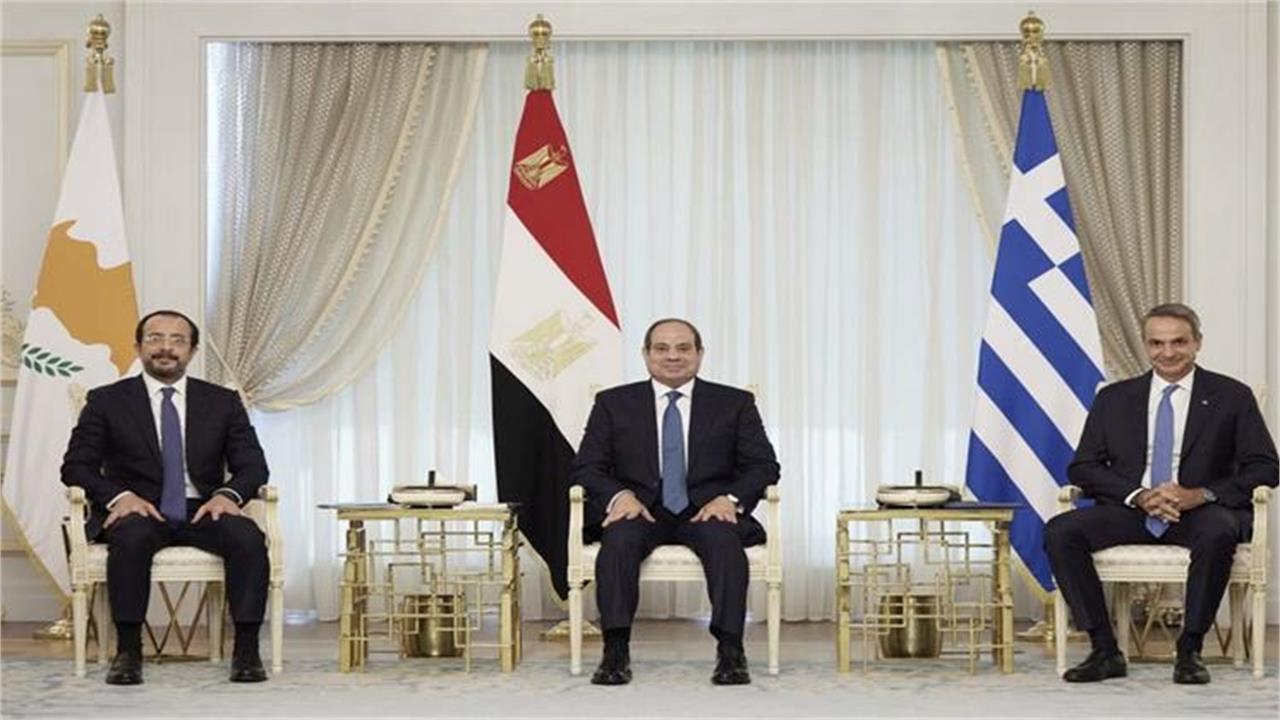
The three countries placed energy security at the center of their trilateral partnership during their September 8 summit in El Alamein, Egypt, while also reaffirming their commitment to international law and cooperation on maritime issues.
Energy cooperation takes center stage
In their Joint Declaration signed on Tuesday, the three countries described energy security as a shared interest and a key pillar of their cooperation, highlighting electricity interconnection projects and stronger collaboration in natural gas.
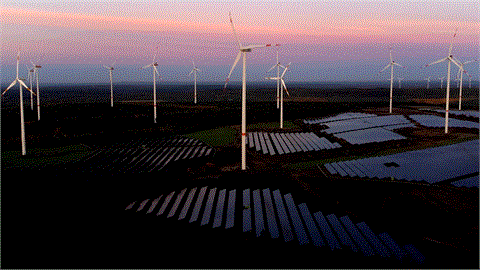
Particular emphasis was placed on the GREGY electricity interconnection between Egypt and Greece, which is intended to help connect the Eastern Mediterranean with European energy markets.
Greek Prime Minister Kyriakos Mitsotakis described the project as strategically important for bringing renewable electricity from Egypt to Europe.
“We have reaffirmed our strong support for the GREGY electrical interconnection,” Mitsotakis said, adding that the project would further strengthen energy security and help turn the Eastern Mediterranean into an energy bridge between North Africa and Europe.
Gas route could connect Cyprus to European markets
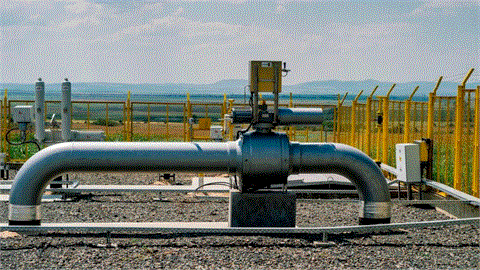
Natural gas was another major focus of the talks, with the Joint Declaration highlighting recent developments toward connecting Cypriot gas fields with Egypt’s existing gas infrastructure and facilities. The three countries called for those plans to be completed as soon as possible.
Mitsotakis outlined how such cooperation could eventually create a wider energy route extending through Greece to other European markets.
“Gas produced in Cyprus will be transported to Egypt, where it will use the infrastructure of that friendly country to be liquefied and could, in theory, return to Europe via regasification facilities in Greece, in Revithoussa and Alexandroupoli,” Mitsotakis said.
From Greece, the gas could then move through the Vertical Corridor to markets in Southeast and Central Europe.
“It is a model of energy cooperation; we have been talking about it for many years, but we are now at the pleasant stage where it is becoming a reality,” the Greek prime minister said.
Maritime cooperation and international law
Alongside energy, the summit placed particular emphasis on maritime cooperation and international law in the Eastern Mediterranean.
The Joint Declaration states that agreements or memoranda of understanding concerning the delimitation of maritime jurisdictions should be concluded in accordance with international law, including the United Nations Convention on the Law of the Sea (UNCLOS).
In his remarks, Mitsotakis pointed to the Greece-Egypt agreement on the partial delimitation of their Exclusive Economic Zones (EEZ) as an example of how maritime boundaries can be addressed through dialogue and respect for international law.
“Greece does not threaten anyone; it seeks stability through functional, good-neighborly relations, always based on international law,” Mitsotakis said.
From political ties to investment
The three countries also agreed to strengthen economic, trade and investment cooperation and encourage closer links between their business communities.
According to the Joint Declaration, the aim is to translate their political relationship into tangible economic opportunities, including private-sector partnerships in priority areas that can support sustainable growth and employment.
Greece and Cyprus also reaffirmed their support for stronger EU-Egypt relations, with the trilateral partners highlighting the role of the EU-Egypt Comprehensive Strategic Partnership in supporting stability, development and connectivity across the Mediterranean.
(news.gtp.gr, September 10, 2026)