by Costis Stambolis*
Europe finds itself navigating increasingly turbulent waters as the global energy crisis deepens under the weight of escalating geopolitical tensions and structural market imbalances. On the one hand, Iran’s hardening stance and the indefinite closure of the Straits of Hormuz have severely disrupted one of the world’s most critical energy chokepoints. On the other, the US Navy’s blockade of Iranian oil exports has compounded supply constraints, creating what can only be described as a perfect storm for global energy markets. As a result, oil and gas prices are entering uncharted territory, with volatility becoming the defining feature of the current environment.
Major energy trading firms are already warning of further turbulence ahead. The convergence of geopolitical instability in the Middle East with a seasonal slowdown in demand has created a paradoxical situation: weakening consumption trends alongside tightening supply. Market leaders increasingly describe the global energy landscape as “choppy,” with sharp and unpredictable price swings becoming more frequent. This volatility is not merely a short-term phenomenon but a reflection of deeper structural fragilities that have been building over time.
According to the International Energy Agency (IEA), global oil demand is expected to fall by 1.5 million barrels per day (b/d) in the second quarter, marking the largest contraction since the Covid-19 pandemic. Yet this decline in demand does little to offset the severity of the supply shock, which is projected to exceed 13 million b/d.
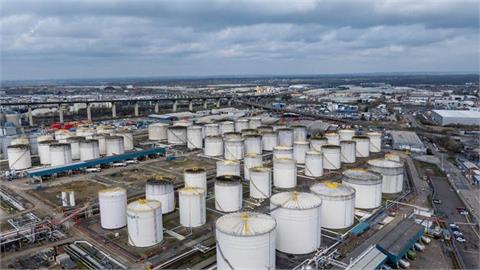
While countries such as Saudi Arabia, the UAE, and Iraq have rerouted some exports through alternative land-based pipelines, the volumes reaching international markets remain insufficient to bridge the widening gap.
Even more alarming is the situation in natural gas markets. The complete shutdown of Qatar Gas has removed approximately 110 bcm of LNG annually from global supply, volumes that are virtually impossible to replace in the short to medium term. This has placed enormous pressure on LNG-dependent regions, particularly Europe, which had already pivoted heavily toward LNG imports following the sharp reduction of Russian pipeline gas. The result is a tightening gas market with heightened competition for available cargoes and rising price pressures across the board.
Against this backdrop of escalating crisis, the European Union’s (EU) response appears increasingly unbalanced, if not disconnected, from the realities of the market. Earlier this week, on April 22, EU leadership announced a package of measures ostensibly aimed at alleviating the immediate financial burden on consumers while addressing the broader crisis. European Commission President Ursula von der Leyen framed the response within the context of the bloc’s long-term strategic priorities, stating that the “AccelerateEU” strategy would deliver both immediate relief and structural transformation by accelerating the transition to clean energy.
While the emphasis on energy independence and resilience is understandable, the policy direction raises serious questions about timing and priorities. Von der Leyen acknowledged that the EU’s energy bill has increased by €22 billion since the onset of the current crisis, adding to an already staggering annual import bill of €340 billion. Yet the proposed solutions remain heavily skewed toward accelerating the green transition, through electrification, expansion of renewables, and subsidies for heat pumps and electric vehicles, rather than addressing the immediate supply constraints in oil and gas markets.
This approach risks overlooking a fundamental reality: nearly 70% of the EU’s energy mix still relies on fossil fuels, with oil and gas alone accounting for around 60% of total consumption. Nuclear energy contributes approximately 12%, while renewables account for roughly 20%. In such a context, policies that focus almost exclusively on long-term decarbonisation, without parallel measures to secure adequate fossil fuel supply in the short to medium term, appear increasingly misaligned with market conditions.
Compounding this imbalance is the European Commission’s emphasis on “coordination” as a key tool to prevent shortages. In practice, this translates into shifting responsibility to national governments, encouraging them to adopt emergency measures to ensure the availability of critical fuels such as diesel and jet fuel, and to maintain refinery output. While coordination is undoubtedly important, it cannot substitute for a coherent, centralised strategy that addresses both supply security and price stability.
The Commission’s focus on expanding electricity grids and facilitating the integration of renewable energy, supported by €219 billion in funding from the Recovery and Resilience Facility (RRF), is another cornerstone of its response. However, such investments, while essential for the long-term energy transition, offer limited relief in the face of an immediate supply shock. Infrastructure projects take years to materialise, whereas the current crisis is unfolding in real time.
Unsurprisingly, senior market executives have expressed growing frustration with what they perceive as a lack of urgency and realism in the EU’s approach. At a time when the global energy system is under unprecedented strain, the absence of measures to boost domestic oil and gas production within the EU is particularly striking. Instead, the bloc continues to rely heavily on imports, with LNG increasingly replacing Russian gas, a dependency that is set to deepen further as Russian supplies are scheduled to be fully phased out by 2027.
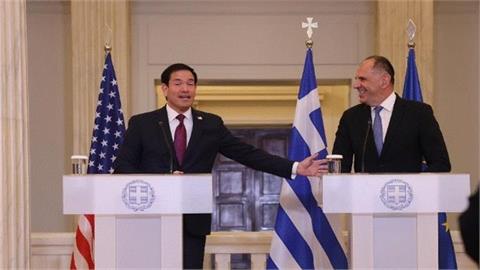
In this otherwise uniform policy landscape, Greece stands out as a notable exception. Until recently regarded as a model for renewable energy development within the EU, the country has taken a decisive turn by accelerating its efforts in hydrocarbon exploration. The recent signing of a contract to deploy a drilling vessel by a consortium led by Chevron signals a clear shift in strategy. Influenced in part by evolving US energy policies, Greece has set ambitious targets to advance exploration activities, with the aim of achieving a degree of self-reliance in oil and gas production as early as 2031–2032.
This move highlights an alternative pathway, one that seeks to balance the imperatives of energy transition with the realities of supply security. It underscores the importance of maintaining a diversified energy mix, particularly in times of crisis, and raises the question of whether other EU member states might follow suit.
Ultimately, Europe’s response to the current energy crisis appears lopsided because it prioritises long-term transformation over immediate stabilisation. While the green transition remains a vital objective and requires full electrification to be effective, it cannot come at the expense of short-term energy security and affordability. Without a more balanced approach, one that includes measures to enhance domestic production, secure supply chains, and stabilise markets, the EU risks prolonging the crisis and exacerbating its economic and social consequences.
As the energy storm intensifies, the need for pragmatic, flexible, and comprehensive policymaking has never been greater. Whether European leaders can recalibrate their approach in time remains an open question, one that will ultimately determine the resilience of the continent’s energy system in the years ahead.
*Costis Stambolis is the Chairman and Executive Director of IENE