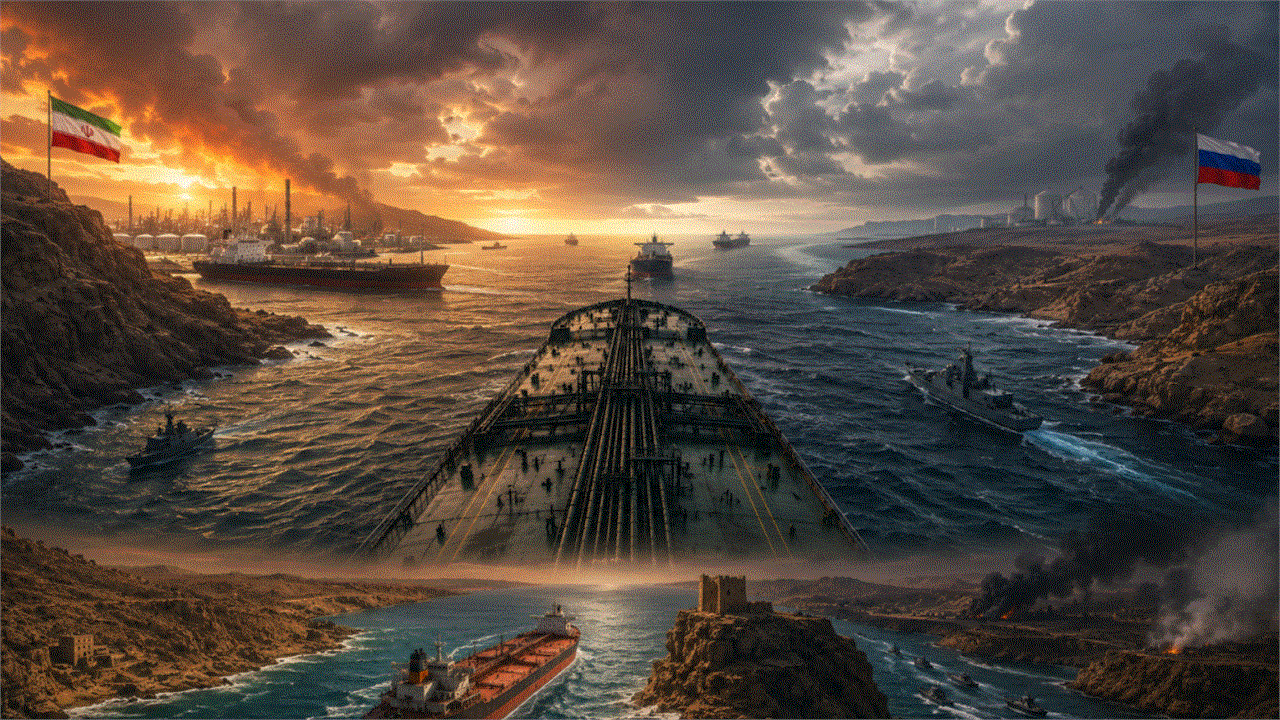
The ongoing geopolitical tensions involving Hormuz, the Sea of Azov, and Bab el-Mandab highlight the persistent risks to global oil supply and market Stability.
For much of the last ten years, global oil markets and their pundits have developed an extraordinary ability to look through geopolitical risk. Tanker attacks, sanctions, pipeline disruptions, refinery outages and military confrontations, which have repeatedly produced short-lived price spikes, pushed traders to conclude that additional barrels would eventually appear from somewhere else. This resilience can create a false sense of security, making the market feel more stable than it truly is. Recognizing this vulnerability is essential for understanding current risks.
That confidence is now facing its most serious test in years.
Three maritime theatres are currently pressuring the global oil system. The Strait of Hormuz remains constrained by the confrontation involving Iran, the United States and the Gulf states. At the same time, Bab el-Mandab has, not unexpectedly, re-emerged as a front-line energy chokepoint as Houthi threats expand beyond container shipping and increasingly target Saudi and regional energy flows. If this is not bad enough, Ukrainian attacks on Russian refining, port and export infrastructure around the Sea of Azov and the Black Sea are not only reducing. Still, they may have put a full stop on the reliability of one of the world’s largest remaining hydrocarbon suppliers.
Taken separately, each crisis would be manageable. When, however, they are in place at the same time, they form the outline of a perfect storm. This interconnectedness should alert the market and policymakers to the heightened risk of a systemic failure that could impact global stability.
The market is not facing a single supply shock anymore, but is confronting a combined disruption to crude production, refined-product availability, tanker capacity, export infrastructure and strategic inventories. It's important to note that Iran, Russia, and the Gulf Cooperation Council countries are being affected in different ways. However, the cumulative or ultimate result is the same: international markets are confronted by a situation in which fewer reliable barrels are reaching them, while the barrels that do move have already become more expensive to insure, transport and refine.
The central question is therefore no longer whether the world has enough oil underground, as American pundits are pushing, but whether sufficient volumes can be produced, shipped, refined, and delivered at the speed required by consumers.
As noted earlier, this is a different problem that crude benchmarks alone don't fully reflect, which is concerning.
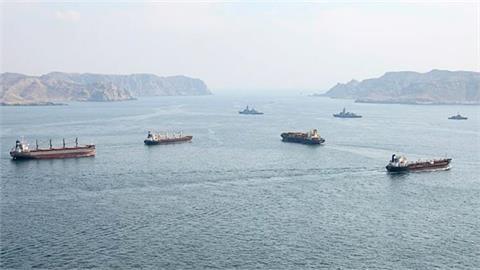
The Strait of Hormuz remains the most obvious source of systemic risk. It is not merely a narrow waterway; it is the central export artery for Iran, Saudi Arabia, the United Arab Emirates, Kuwait, Iraq, Bahrain and Qatar. The corridor is the main outlet for a major share of the world’s crude, petroleum products and LNG. Even a partial disruption therefore has consequences far beyond the physical loss of Iranian exports.
Iranian crude and condensate exports are directly exposed. Still, for markets, the bigger risk is wider damage from reduced vessel traffic, war-risk restrictions, higher insurance premiums, and uncertainty over the safety of Gulf loading terminals. International shipowners do not need a formal closure order to stay away.
There is a clear need to separate theoretical production capacity and effective export capacity. Yes, Riyadh and Abu Dhabi can still produce additional oil. Still, these are stranded additional volumes if tankers are delayed, routes are contested, or export terminals remain vulnerable.
Saudi Arabia’s East-West Pipeline to Yanbu and the UAE’s Habshan-Fujairah system have provided important alternatives, but not at all complete substitutes for Hormuz. Not only is their capacity limited (physical), but the receiving ports, storage facilities, and associated tanker logistics are not designed to absorb the full export burden of the Gulf. As noted earlier, the Saudi alternative increasingly depends on the security of the Red Sea.
That is where Bab el-Mandab enters the equation.
In the last two years, the Red Sea-Houthi crisis was largely treated as a container-shipping problem. Major liner operators have diverted vessels around the Cape of Good Hope, causing freight costs to rise while European importers absorbed longer transit times. Oil pundits still believed the assumption that energy flows would remain relatively protected.
That distinction is now becoming harder to maintain.
The more Saudi crude, petroleum products, and petrochemicals are redirected toward Yanbu, the more Houthis and others start to realize the strategic importance of Bab el-Mandab. Houthi threats against Saudi shipping, now even with direct attacks on Saudi oil tankers, carry much greater significance right now than when Hormuz was fully operational. The Red Sea is no longer simply an alternative route. It has become part of the Gulf’s emergency export architecture, as also seen by the new logistical setup presented by other GCC countries and shipping lines.
If Bab el-Mandab becomes too dangerous for regular tanker traffic, Saudi Arabia will still export some volumes northward through the Red Sea. This, however, will add cost for all, as cargoes would struggle to reach Asian markets without a Cape diversion. European importers and industry stakeholders should prepare for higher insurance, convoy requirements, and delays, recognizing the economic impact of these disruptions.
This is the first major multiplier effect in the current crisis: the alternative to one chokepoint is itself exposed to another. The second multiplier effect concerns shipping capacity. Markets will need to deal with the situation that a tanker does not need to be destroyed to disappear from the market; it can become commercially unavailable simply by spending weeks longer at sea.
Red Sea traffic rerouted via the Cape of Good Hope will increase voyage distances, consume more bunker fuel, and tie up vessels for longer periods. The effective capacity of the global tanker fleet will decline even if the number of ships remains unchanged. Freight rates will increase even more, while charterers compete for fewer open vessels and exporters face delays in moving cargoes.
The loss is measured not only in barrels per day, but also in ton-miles, waiting times and vessel productivity.
The Russian theatre adds a third layer of pressure. Ukraine’s campaign against Russian energy infrastructure has moved well beyond symbolic attacks, as refineries, storage sites, pipelines, oil depots and export facilities around the Black Sea and Sea of Azov are being hit effectively. It will not necessarily remove Russian crude production immediately. The direct effects are reduced refining throughput, delayed exports, and an overall increase in operational risk attached to Russian ports and shipping.
Again, this distinction is pivotal. Russia is still going to be one of the world’s largest crude exporters. At the same time, Moscow is also a major supplier of diesel, fuel oil, naphtha and other refined products. A refinery disruption is expected to have a very large effect on product markets. This will be larger than on crude prices.
That helps explain why refinery cracks have moved to exceptionally high levels.
The oil market is increasingly splitting into two realities. Crude benchmarks still reflect concerns about weak global demand, high interest rates and slowing industrial activity. At the same time, refined-product markets are pricing much tighter. Refinery outages are supporting diesel, jet fuel and gasoline margins, disrupted Russian exports, longer shipping routes and reduced inventory flexibility.
Reality right now is that we have a market in which crude may appear relatively calm while consumers face a much sharper energy shock.
This is why current refinery cracks are more important than many headline crude-price movements.
Consumers and industry do not purchase Brent; they take gasoline, diesel, jet fuel, heating oil, and petrochemical products. Industrial economies run on middle distillates. Trucking, shipping, mining, agriculture, construction, and military logistics all still depend heavily on diesel, which has not changed over the last few years despite energy transition strategies. If diesel cracks remain at extreme levels, economic damage will be severe or even spread like a bushfire, even without Brent immediately breaking above previous highs.
These developments are all hitting the market at another stress point, which is not solely linked to upstream production, as it is the entire chain between the wellhead and the end user.
That pivotal chain has become more vulnerable in recent years, mainly due to years of underinvestment in refining capacity, storage, and strategic redundancy. We have witnessed, especially in Europe, but also in the USA, refinery closures following the pandemic, which reduced spare capacity. Especially in Europe, environmental regulation is discouraging investment in long-lived hydrocarbon infrastructure. At the same time, global demand for transport fuels and petrochemical feedstocks remained resilient, in contrast to the expectations of policymakers in the West and their pundits. The world has entered the current crisis without realizing that it has less refining flexibility than policymakers assumed.
Strategic Petroleum Reserves should, at least in theory, provide a buffer. However, in reality, they have become a weaker line of defense. Even before the Iran crisis hit, the USA had already drawn heavily on its Strategic Petroleum Reserve in recent years. When looking at the European emergency stocks, they exist, but repeated crises have increased political pressure to use them. China and India have expanded strategic inventories, yet those stocks are primarily designed to protect their own national interest, aka national supply, rather than stabilize the global market. China is, however, a dark horse at present, as we have been reporting widely.
There is also a fundamental limitation to reserves: they can replace missing barrels temporarily, but they cannot repair damaged refineries, clear maritime chokepoints or create additional tanker capacity. At the same time, it needs to be realized that releasing crude from storage does little to solve a diesel shortage if refiners are already running close to maximum utilization. The effect is even less if the crude is in the wrong location, of poor quality, or even totally unable to reach the required refinery.
This is where the perfect-storm argument becomes most compelling. In our opinion, the world is clearly heading for it as it is simultaneously losing supply flexibility, refining flexibility, logistical flexibility and inventory flexibility. During all former crises, at least one of these buffers usually remained available.
During the Libyan civil war, other OPEC producers increased output. During the first phase of the Russia-Ukraine conflict, strategic reserves were released, and Russian crude was redirected toward Asia. During the initial Red Sea crisis, ships sailed around Africa, and the additional costs were absorbed. However, in the current situation, we need to recognize that those solutions are hitting their limits.
Gulf replacement barrels are exposed to Hormuz. Saudi rerouting is exposed to Bab el-Mandab. Russian exports are facing direct attacks on ports and refineries. At the same time, looking at logistics and maritime, Cape diversions are and will remain for a long period, consuming tanker capacity. Strategic reserves are already depleted from previous interventions, even though the EIA has now changed its own assessments dramatically, contrary to market views. Refineries are benefiting from high margins mainly because there is not enough spare capacity to respond quickly. The market may therefore be underestimating the total effective supply loss.
For most analysts and advisors, it seems very tempting to quantify the crisis by adding together disrupted Iranian exports, reduced Russian product flows, and constrained Gulf shipments. However, the real impact is larger than the sum of these individual losses. Every additional day at sea, every delayed tanker, every refinery outage, and every unavailable storage barrel amplifies the original shock. The effects are cumulative and will soon show their face.
A nominal loss of several million barrels per day can create a much larger commercial impact if the remaining supply is badly located, difficult to insure, or unable to reach the required refinery. This is even worse if the available crudes are not the quality needed in most places.
This is also why the oil bulls have not yet taken full control. While financials are still focusing on (perceived) demand weakness, they argue that a China industrial slowdown, subdued European growth, and the threat of recession remain powerful bearish forces. They also adhere to the theory that high prices themselves also destroy demand. Airlines reduce capacity, consumers drive less, and industrial users cut production. Even though these concerns are partially real, it should be argued that demand destruction is not the same as market stability. It is often the final mechanism through which an undersupplied market rebalances. Prices rise until consumption weakens enough to match the reduced availability of supply.
While most analysts see this as a bearish outcome for the economy, it should be seen as the economic cost of the supply shock. It is to be expected that the future trigger for a more decisive oil rally will not be a dramatic announcement, but the accumulation of smaller developments that finally convince traders that the disruptions are no longer temporary.
Some of these small “incidents” are on the horizon already:
Another major Russian refinery outage will tighten diesel markets further.
A successful attack on Gulf export infrastructure will remove additional crude capacity.
A prolonged restriction on Hormuz traffic will force more tankers to remain idle.
A serious escalation near Bab el-Mandab is going to undermine the Saudi Red Sea route.
A renewed drawdown in commercial and strategic inventories will for sure start to expose how little emergency cover remains.
If these happen, the market's focus will start to shift (even with unexpected speed) from demand concerns to physical availability. If confidence in supply breaks, oil markets rarely move gradually. Oil markets tend to remain complacent for too long, but to reverse violently. The reason for this is simple but sometimes forgotten. Paper traders can ignore geopolitical risk, but refiners, airlines, shipping companies, and physical commodity traders cannot ignore missing cargoes. In general, the physical market will eventually force the financial market to respond.
Oil bulls at present are not waiting for a theoretical shortage, but for visible confirmation that the existing buffers are failing.
This could be presented via falling inventories, widening backwardation, record product cracks, higher tanker rates or emergency government intervention. But, not to be minimized, it could also hit through a single military incident that changes commercial behavior across an entire region. If insurers, refiners and shipowners (irrespective of the order) start to act, though the crisis is structural rather than temporary, prices will adjust accordingly.
The world faces not three unrelated conflicts (Hormuz, Bab el-Mandab and the Sea of Azov) but interconnected pressure points within the same global energy network. This is not simply another geopolitical premium added to the oil price, but the erosion of the market’s ability to compensate.
The perfect storm is maybe still hiding; bulls are not waiting for it to show, but for the rest of the market to recognize that it has.
(by Cyril Widdershoven, MENA Geopolitics Watcher/Linkedin, July 23, 2026)