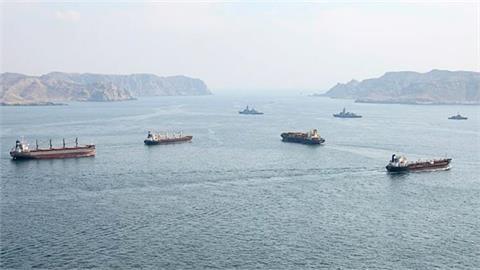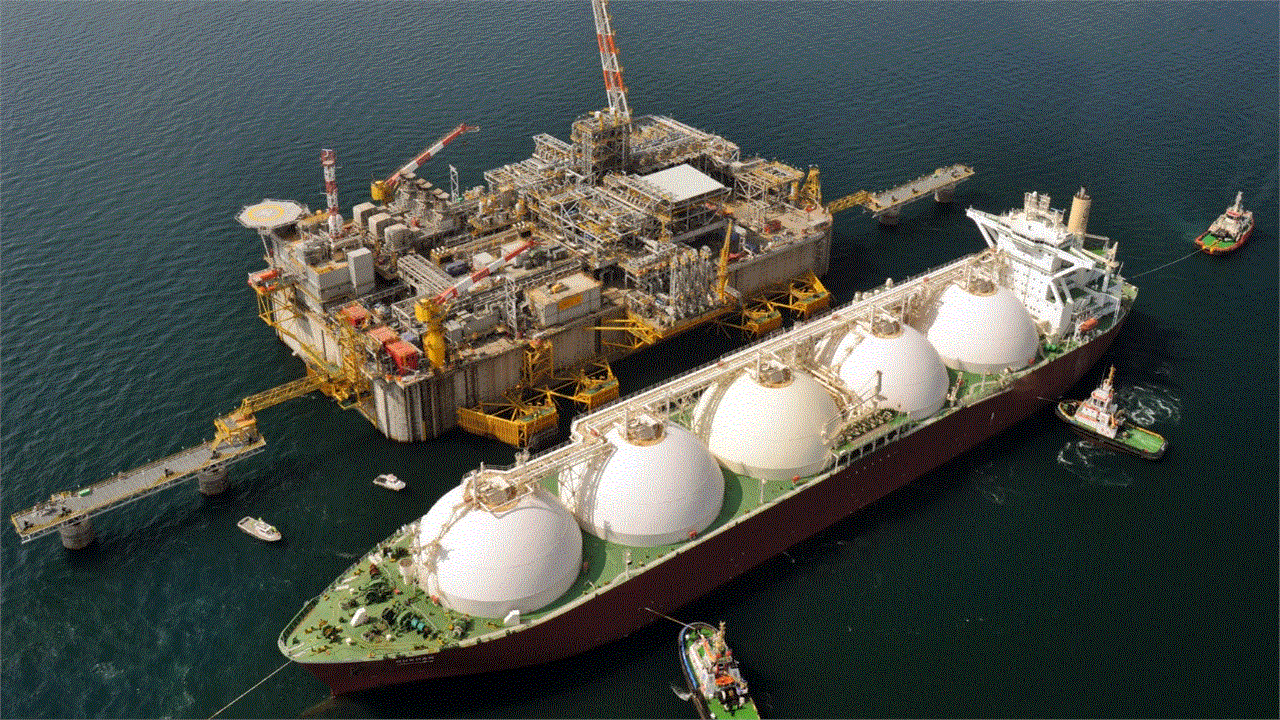
The global LNG market is again in trouble as a consequence of the unfolding tensions in the Persian Gulf and the implications of the Strait of Hormuz blockade for the region’s largest exporter, Qatar.
As reported by Edison, the Italian subsidiary of the French group EDF, which has emerged as one of the best and most reliable sources regarding QatarEnergy’s difficulties, the state-owned company has extended the force majeure by an additional 3 LNG cargoes.
In a press release published on its website, the company confirmed on July 28 that it had received a further notice from QatarEnergy confirming the continuation of the force majeure event that prevents the seller from fulfilling its contractual obligations for gas deliveries to Italy.
As a consequence, the duration of the force majeure period, which began at the beginning of April, has been extended through the end of September, with a total of 24 cargoes destined for the Adriatic LNG terminal, near the city of Rovigo in Italy’s Northeast, subject to force majeure.
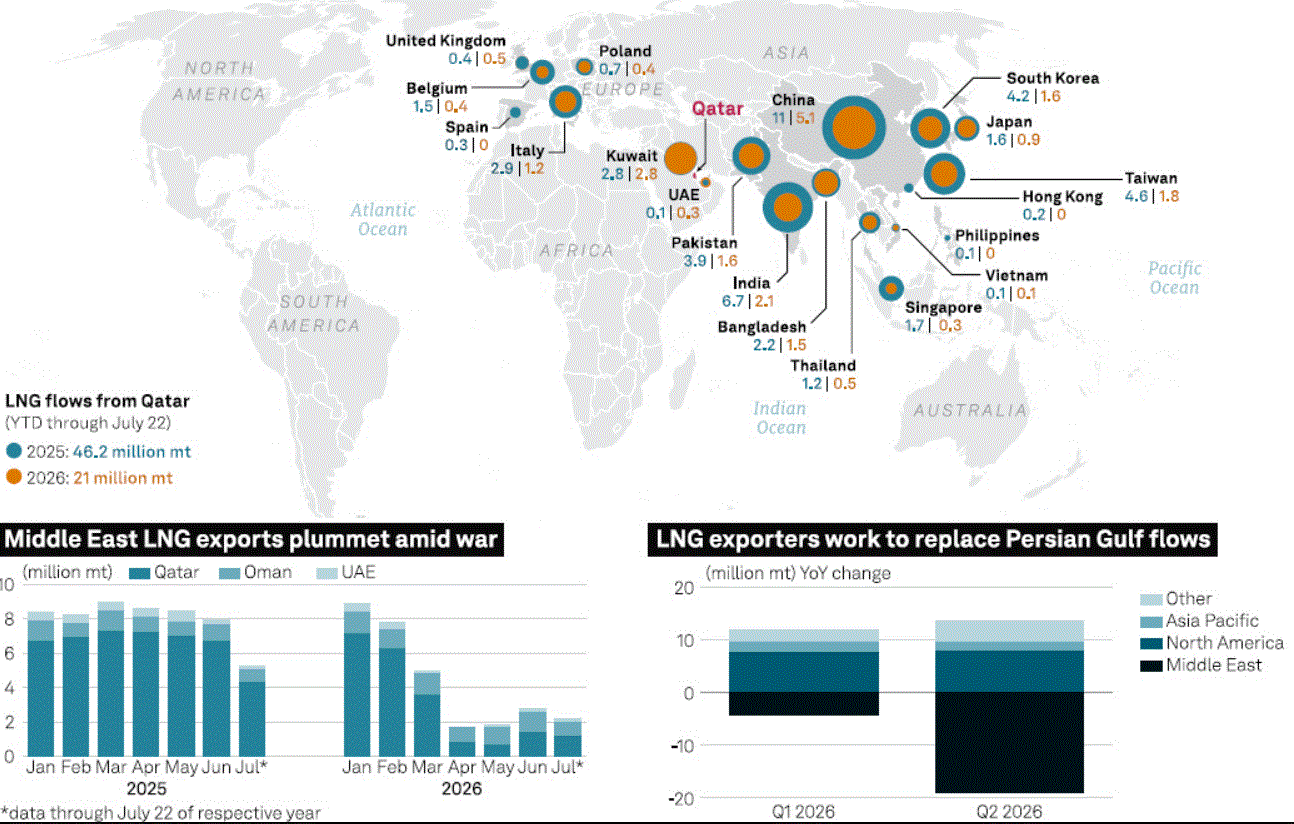
Map: Global Losses of Qatar LNG and Major Markets Affected
Source: S&P Global Energy
The terminal, which has been upgraded through an increase in the annual terminal’s regasification capacity, rising from 9 to 9.5 billion cubic metres, is the largest in Italy’s LNG infrastructure. In 2025, it covered around 13% of national gas demand, injecting 8.2 bcm of gas into the grid.
The gas injected through the Adriatic terminal originated primarily from the LNG exported by Qatar and the United States (71 cargoes in total). Following the latest announcement, Italy and QatarEnergy’s other European and Asian clients should not expect any cargo coming from the Persian Gulf LNG exporter for at least the next two months.
This scenario further complicates the refilling season for gas storages that appears increasingly difficult, not just in Europe, but also in Asia.
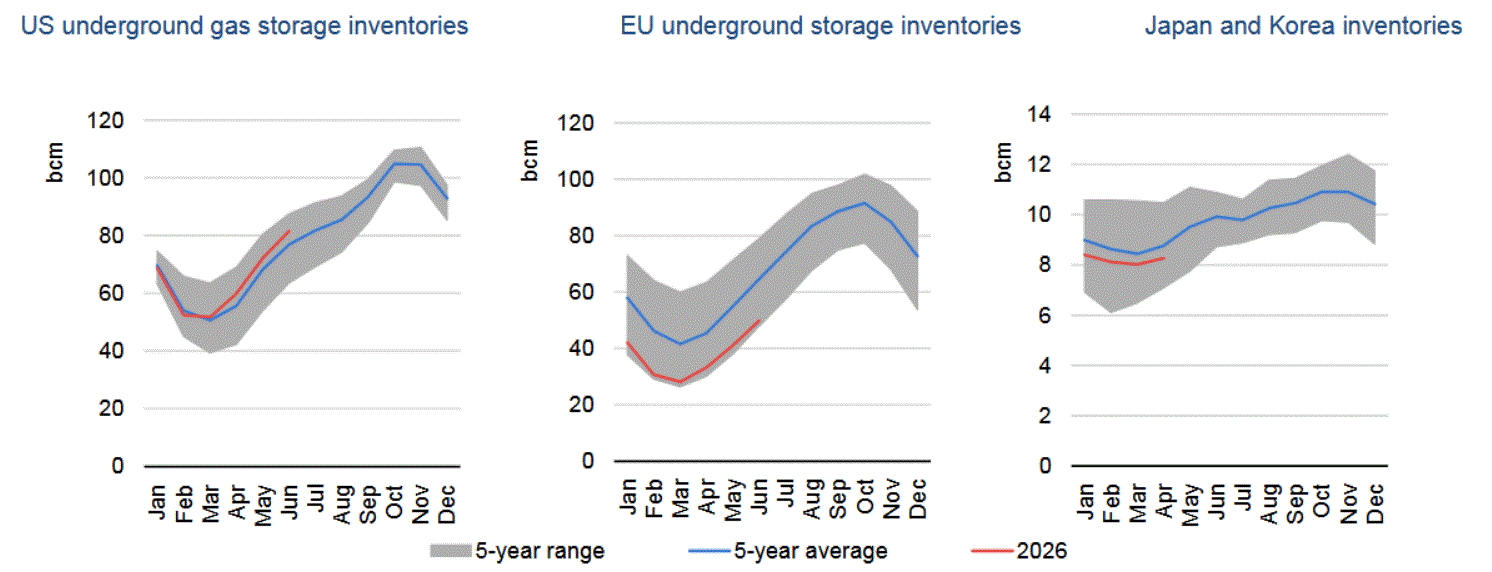
Chart: Summer storage trajectories diverge in the United States and Europe
Source: IEA
This suggests that the current price levels—yesterday’s settlement for the Dutch TTF Front Month was 56.315€/MWh, equal to 18.797$/MMBtu and -1.8% on the day — represents only a temporary setback influenced by the foolish belief of the market and the illusion of a de-escalation in the Gulf, as I explained on Monday in this analysis. ‘
Instead, Friday’s close at 62.830€/MWh, equal to 20.963$/MMBtu, the highest market assessment for European gas prices in three years and a half, dating back to the months immediately following the Russian invasion of Ukraine— is likely to prove only an intermediate threshold. It could be surpassed again in the coming days if the security situation in the Middle East continues to deteriorate, as I explain later, with far-reaching implications for global LNG markets.
Already today, markets are rallying again on news and renewed concerns regarding fundamentals and geopolitical developments.
Woodside Energy, one of the largest of Australia’s gas producers and its leading LNG exporter, has confirmed gas production was down by more than 20% in the first six months of 2026. This originated in the planned maintenance at Pluto Train 1 as well as the long shutdown of production at several plants affected by cyclone Narelle impacts, which disrupted production at several terminals in March and April.
Moreover, as argued in my analysis yesterday on the Saudi-Houthi clashes, the situation in the Middle East is once again spiraling towards further escalation.
After Saudi Arabia blamed Iranian-backed militias operating in Iraq for attacking its oil infrastructure, while avoiding direct references to the Houthis for political purposes, new escalatory developments have now emerged.
U.S. and Saudi forces jointly attacked “logistics and weapons sites across eastern Iraq in a strong response to over 30 IRGC-directed aerial drone attacks in the last 72 hours,” according to a CENTCOM press release. These attacks reportedly killed 20 fighters, in a dangerous expansion of the conflict into yet another part of the region.
In response, the IRGC launched several ballistic missiles against U.S. troops in Jordan, with U.S. authorities announcing that five missiles had been intercepted.
The combination of prolonged disruptions to Qatari LNG exports, weakening supply fundamentals elsewhere, and a widening regional conflict suggests that the recent correction in European gas prices may prove short-lived.
Rather than signalling a return to stability, the market is once again underestimating the geopolitical risks confronting global LNG supply.
Good luck with sweeping dust under the same rug over and over!
(by Francesco Sassi, Energy Geopolitics & Statecraft, July 29, 2026)