by Costis Stambolis
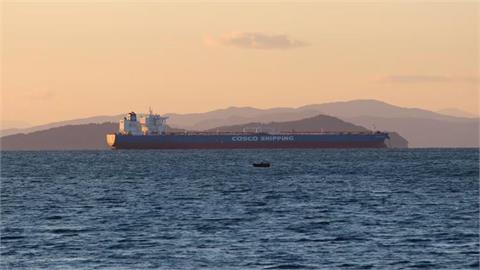
Just when Europe appeared to have weathered the worst of its recent energy shocks, it finds itself once again at the centre of a geopolitical storm. On one side, renewed hostilities between the United States and Iran have destabilized the Gulf, with Tehran disrupting the seaborne transport of oil and LNG through the Strait of Hormuz, the world's most critical energy chokepoint. On the other, the Russia–Ukraine war continues unabated, with Ukrainian forces recently inflicting significant damage on oil production and refining facilities deep inside Russia, but also on tankers transporting Russian and Kazakh oil through the Black Sea. Together, these two crises have once again exposed Europe's energy vulnerability.
The immediate consequence has been a renewed surge in international oil and natural gas prices, with oil gaining some 25% over the last 20 days, as Brent is now trading in the $90 region, while natural gas at TTF, Europe’s gas hub, is now trading at €60/MWh, up by 50% since July 01.
Europe has little influence over these developments, yet its economy bears the full cost. Rising crude prices are feeding directly into higher fuel prices at the pump, while elevated natural gas prices are once again pushing up wholesale electricity prices through the EU's marginal pricing mechanism, where gas-fired generation continues to set the market price in many countries. After a brief period of easing inflationary pressures, which was down at 2.8% in June, the eurozone now faces another round of price increases driven largely by imported energy costs.
This should come as no surprise. The European Union remains heavily dependent on imported fossil fuels, with oil and natural gas together accounting for roughly 60% of the region's primary energy supply, while fossil fuels overall still provide close to 70% of Europe's total energy needs. Despite more than a decade of policies promoting renewable energy, the continent's dependence on imported hydrocarbons has changed far less than policymakers had hoped.
The fundamental weakness in Europe's energy strategy is that renewable energy sources, successful though they have been in expanding electricity generation, address only one part of the energy equation. Wind, solar and hydro now account for around 44% of EU electricity generation, an impressive achievement by any measure. However, electricity itself represents only about 23% of final energy consumption. The remaining three-quarters of Europe's energy demand comes from transport, industry, heating and countless industrial processes that continue to rely overwhelmingly on liquid fuels and natural gas. Renewables alone cannot bridge this gap.
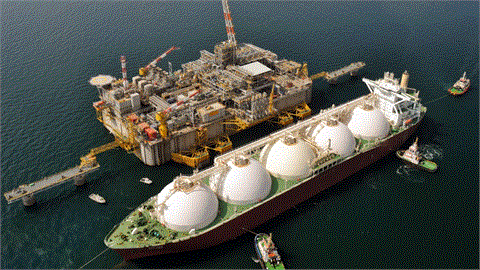
At the same time, Europe has deliberately reduced one of its most important sources of natural gas. Before Russia's invasion of Ukraine, Russian supplies accounted for around 40% of EU gas imports. Today that share has fallen to roughly 15%, with Brussels determined to eliminate all remaining Russian gas imports by January 1, 2027. Whether that target can realistically be achieved remains doubtful, particularly for several countries in Central and South-East Europe that continue to depend on Russian pipeline gas. Yet instead of acknowledging these practical constraints, the prevailing policy has been to substitute one external dependency for another by increasing imports of US LNG, a solution that comes at a considerably higher cost than pipeline gas and leaves Europe exposed to another external supplier.
The irony is difficult to ignore. While Europe possesses an estimated 7.5 billion barrels of proven oil equivalent reserves, exploration and development activity continues to face mounting regulatory and political obstacles. Rather than encouraging responsible domestic production that could improve security of supply and moderate import dependence, European policy has largely discouraged new upstream investment. Indigenous resources remain underutilized while import dependency persists.
Meanwhile, the European Commission continues to double down on its decarbonisation agenda. Its announcement on July 17 extending free emissions allowances for industry beyond 2030 acknowledges the growing concern over industrial competitiveness and soaring energy costs. Yet such measures merely soften the symptoms rather than address the underlying problem. As many industry representatives have argued, the proposal is too little and too late. The broader policy framework, designed to achieve carbon neutrality by 2050, remains essentially unchanged despite mounting evidence that it is imposing increasingly heavy costs on European consumers and manufacturers alike.
Europe therefore finds itself in an improbable energy impasse. It has pursued ambitious climate objectives while underestimating the continuing importance of secure, affordable hydrocarbon supplies. The twin geopolitical crises unfolding simultaneously in the Gulf and Eastern Europe have once again demonstrated that energy security cannot be separated from foreign policy, defence or economic competitiveness.
Unless European policymakers adopt a more pragmatic approach, one that combines decarbonisation with greater support for indigenous oil and gas production, diversified supply sources and realistic assessments of future energy demand, the continent will remain vulnerable to every geopolitical shock that disrupts global energy markets. As recent events have once again demonstrated, Europe is paying a high price for policies that have failed to adequately balance climate ambition with energy security. Unless this course is fundamentally reconsidered, European households and businesses alike should expect much higher energy costs, weaker industrial competitiveness and greater economic uncertainty for years to come.
*Costis Stambolis is the Chairman and Executive Director of IENE