by Costis Stambolis*
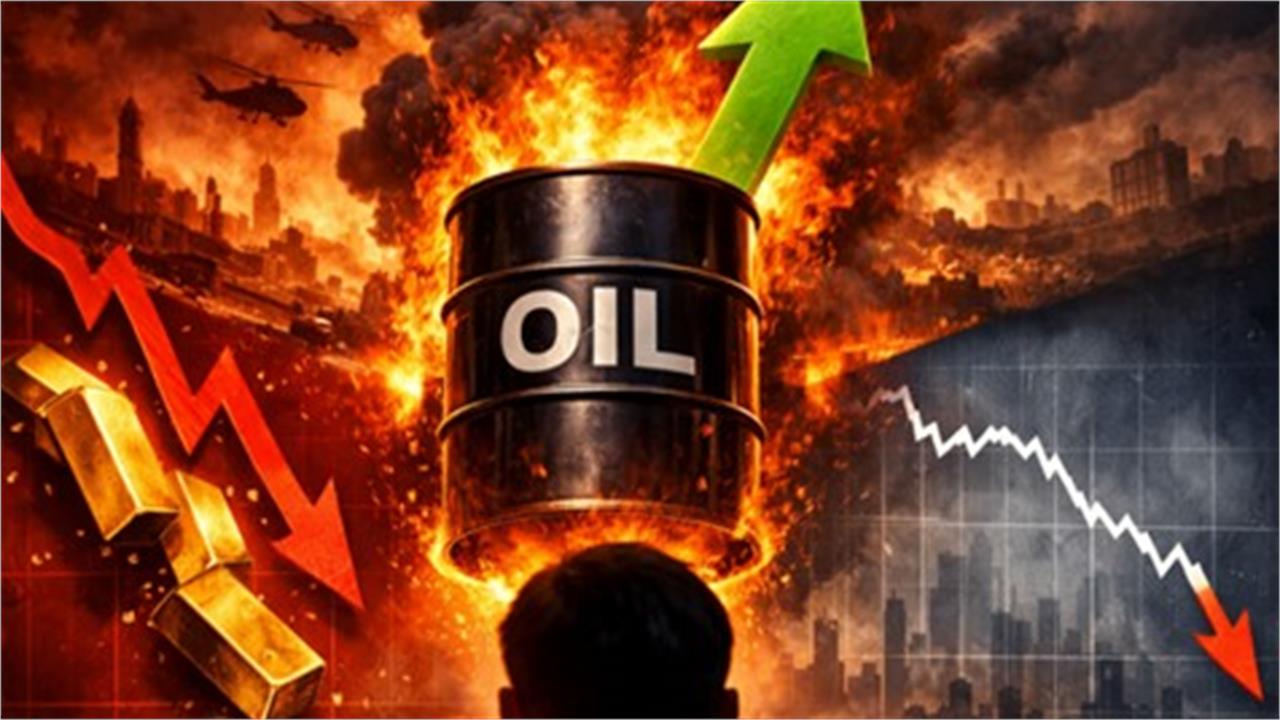
As the war centred on Iran enters its fifth week, and despite President Trump’s efforts to negotiate a peace deal with Tehran, the conflict is rapidly expanding across the Middle East, drawing in more than fourteen countries and transforming what began as a regional confrontation into a full-scale geopolitical crisis. Tehran has widened its target list, striking locations well beyond the immediate Gulf area, including sites hosting United States military assets. The implications for global energy markets are profound. What is now unfolding is nothing short of a double energy shock: a sharp disruption in both production and transportation of oil and gas. The worst since the oil crises of the 1970’s.
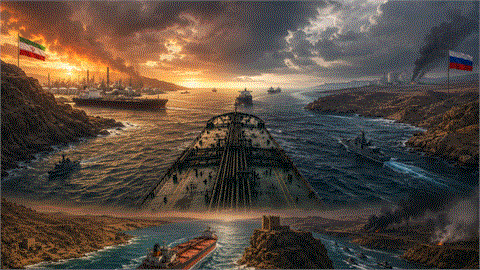
Sustained Iranian missile and drone attacks have severely impacted oil and gas infrastructure across the Gulf. Production facilities, refineries, and export terminals have been damaged or destroyed, forcing operators to scale back or halt output. At the same time, the effective closure of the Strait of Hormuz has brought energy exports from the region to a near standstill. Tankers remain anchored or have diverted course, unwilling to risk transit through increasingly dangerous waters. So far, around twenty vessels have been struck, several of them destroyed or left ablaze — a stark indication of the scale and precision of the attacks.
The consequences for global supply are far reaching. Oil production and exports from key Gulf producers have fallen sharply. Crude flows from Saudi Arabia and the United Arab Emirates have dropped to below 8 million barrels per day, with volumes rerouted through alternative export points such as Yanbu on the Red Sea and Fujairah on the Gulf of Oman. Yet these workarounds can only partially offset the loss of capacity through Hormuz. Global markets are now estimated to be at least 10% short of oil output in a daily global supply of approxim 105 mb/d.
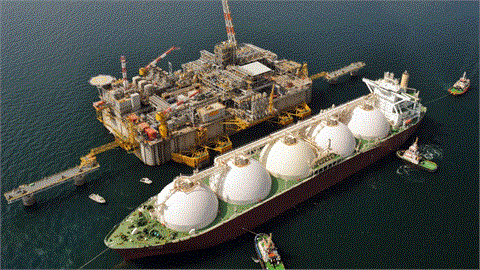
The situation is even more acute in natural gas. LNG production from Qatar’s Ras Laffan complex, a cornerstone of global LNG supply, has effectively frozen following extensive damage to production units. With roughly 20% of global LNG supply affected, the shock to international gas markets has been immediate and dramatic.
Unsurprisingly, prices have surged. Brent crude has climbed above $110 per barrel, marking a 50% increase since the outbreak of hostilities in late February. The OPEC basket reached much higher levels at $ 145 per barrel. European gas markets have experienced even sharper movements, with one-month futures at the Dutch TTF hub — Europe’s benchmark — rising to above €61/MWh, nearly doubling in just twenty days. Energy costs are once again feeding into inflationary pressures, with petrol prices at the pump reaching their highest levels since 2022.
The crisis now risks entering a really dangerous phase. Following rejection by Tehran of President Trump’s 15-point plan demanding among others that Tehran reopen the Strait of Hormuz or face direct attacks on its power generation infrastructure, tensions have escalated further. Iran has signaled it is unlikely to comply, raising the prospect of intensified military action and further destabilisation of already fragile energy flows. At the same time hostilities between USA/Israel and Iran continue unabated with daily bombardments, missile strikes and loss of human life and systematic destruction of infrastructure from both sides.
For Europe, the situation is deeply troubling. The continent finds itself once again at the mercy of external shocks, its energy system heavily exposed to global commodity markets. With approximately 60% of its energy mix reliant on imported oil and gas, Europe is particularly vulnerable to disruptions originating far beyond its borders. The current crisis bears uncomfortable similarities to the oil shocks of the 1970s, both in scale and in its potential economic fallout. Today, Europe faces a gas supply shortfall of 10% of its LNG imports and 15-20% of its oil imports from the Gulf.
Several European governments have moved swiftly at national level,introducing emergency measures such as temporary tax deductions on fuel sales in an effort to prevent runaway inflationary pressures,with some providing cost subsidies, while others are resorting to straight forward petrol rationing. Yet these responses remain fragmented, reflecting a broader failure at the European level to articulate a unified and effective strategy.
The European Union, despite the lessons of the 2022 energy crisis triggered by the war in Ukraine, appears once again to be struggling to respond decisively. Rather than presenting a coordinated plan to address supply shortages and escalating prices, policymakers in Brussels have largely reverted to procedural statements and incremental measures. The official communique following the March 19 European Council meeting, calling on the Commission to “continue to report” and “propose measures as appropriate”, fell well short of the urgency demanded by the situation.
This lack of direction has not gone unnoticed. At the recent IENE Energy Security Roundtable held at the European Parliament (link, March 19), industry executives and energy experts voiced clear frustration. Three weeks into a rapidly escalating crisis, they argued, the European Commission appears unprepared and unable to offer concrete solutions to mounting supply risks and price volatility.
The contrast between the scale of the crisis and the EU’s response could not be more stark. As global energy markets tighten and geopolitical risks intensify, Europe’s continued reliance on ad hoc measures and national initiatives risks undermining both market stability and public confidence.
The present crisis is a clear reminder that energy security cannot be taken for granted. Without a cohesive and forward-looking strategy, Europe risks remaining perpetually exposed to external shocks. As the Middle East conflict deepens and energy markets grow increasingly volatile, the need for decisive, coordinated action at the European level has never been greater.
Above all the EU will need to radically revise its energy policy and move beyond its stereotype “Green Deal” agenda which clearly cannot serve the continent’s needs for increased oil and gas use. Today the bulk, i.e. 60%, of EU’s energy demand is met by fossil fuels with oil contributing almost 37% of current needs, a sharp uptick from 33% ten years ago, and gas contributing some 23%, again higher than in 2013.
It is becoming clearer by the day that unless the EU includes both oil and gas, in addition to renewables, to its long-term energy strategy, and abandons its carbon neutral fantasies, which aim for zero hydrocarbon use in less than 25 years, it will not be able to survive in a global environment where there will be fierce competition for limited supplies. In other words the EU is called upon to develop and adopt an oil and gas strategy for the next day, and through that encourage indigenous exploration and production while bolstering its unique downstream sector. Anything short is likely to lead to energy demise and economic bankruptcy.
* Costis Stambolis is the Chairman and Executive Director of IENE.